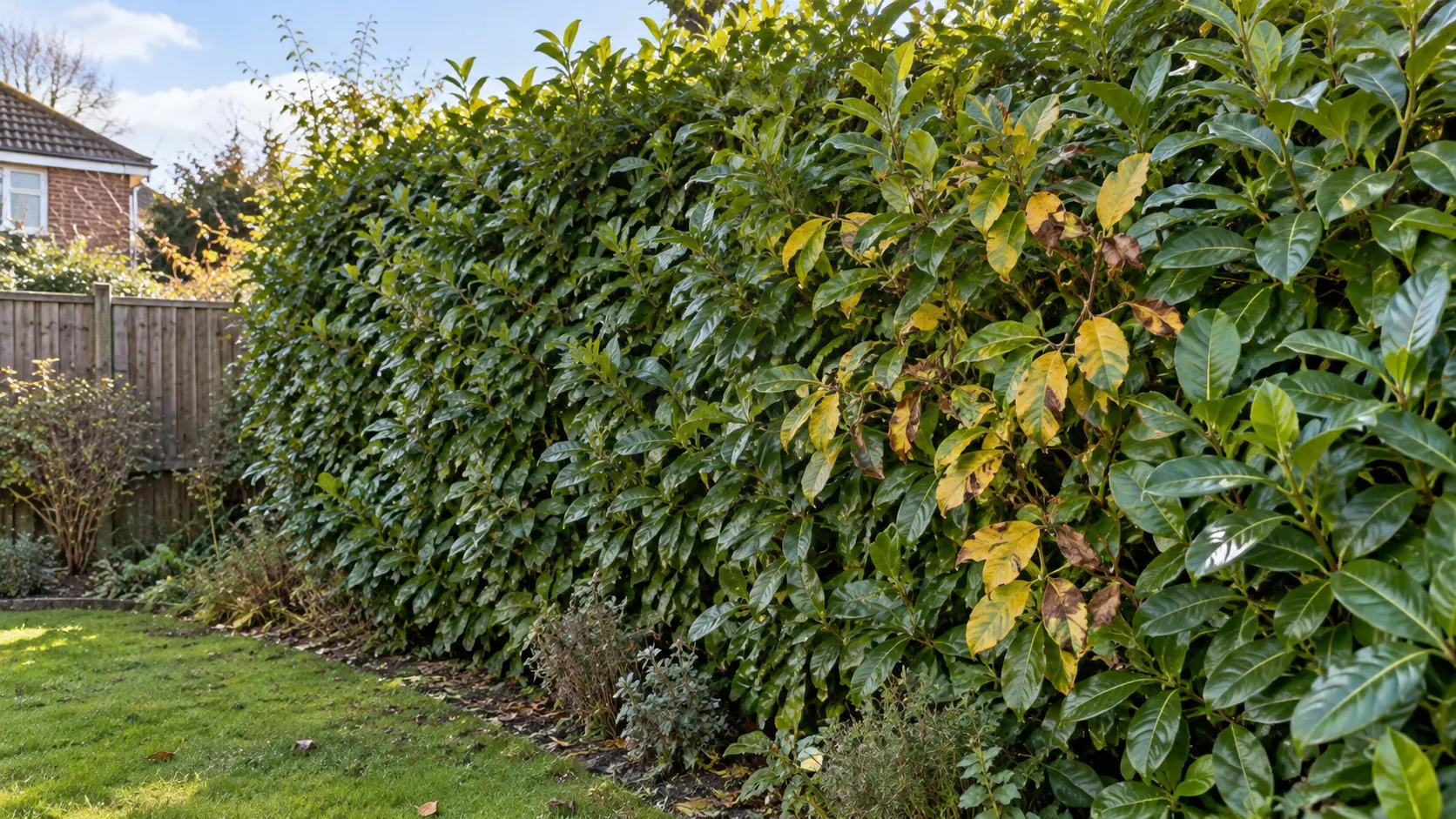


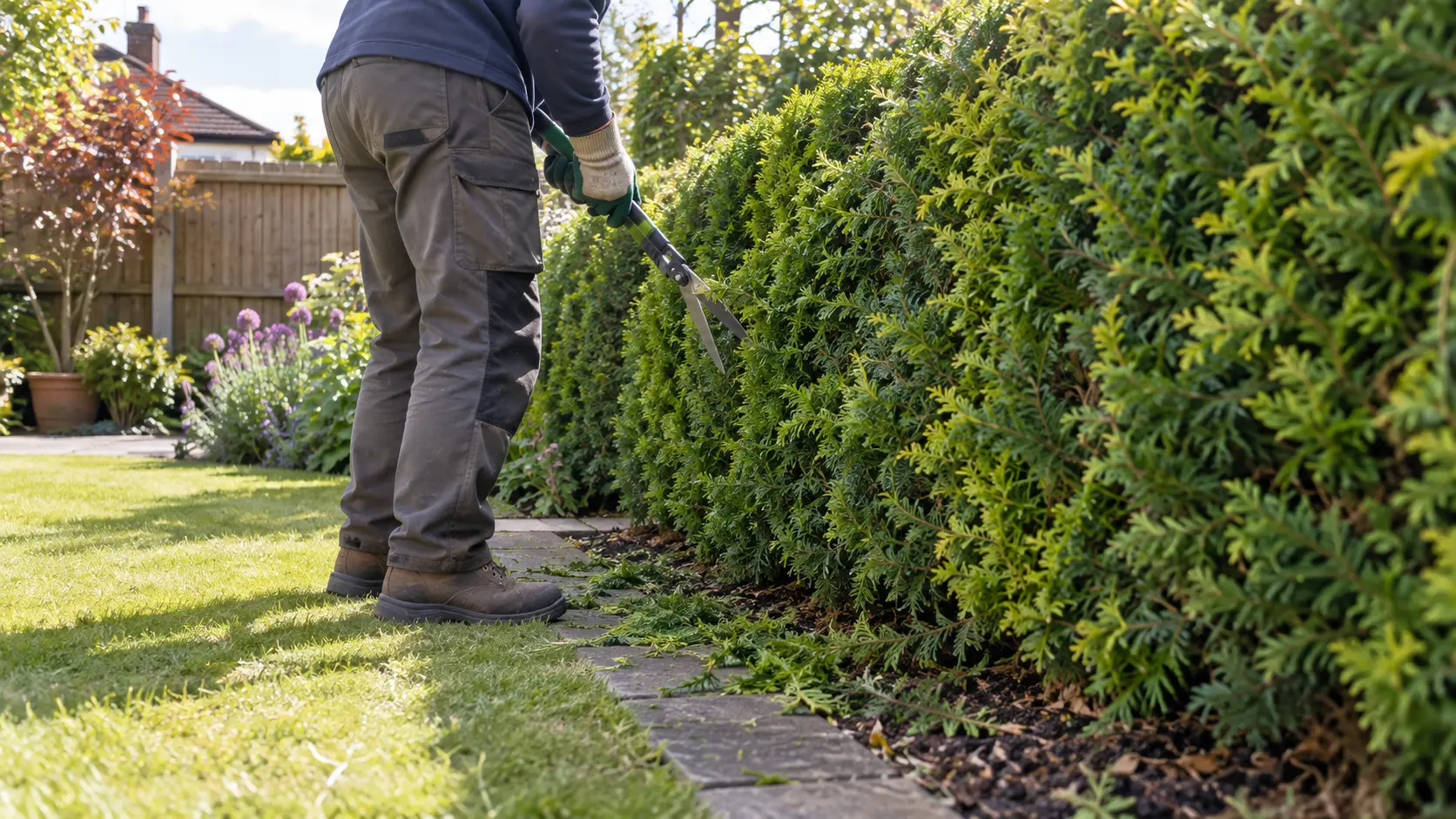
When pruning conifers in the UK, many species can be lightly trimmed between April and the end of August, but the correct timing depends on the plant and the work required. Most conifers will not regrow if you cut into bare brown wood. Yew is the main exception, while Thuja may recover less reliably. Always check dense foliage for active bird nests before starting.
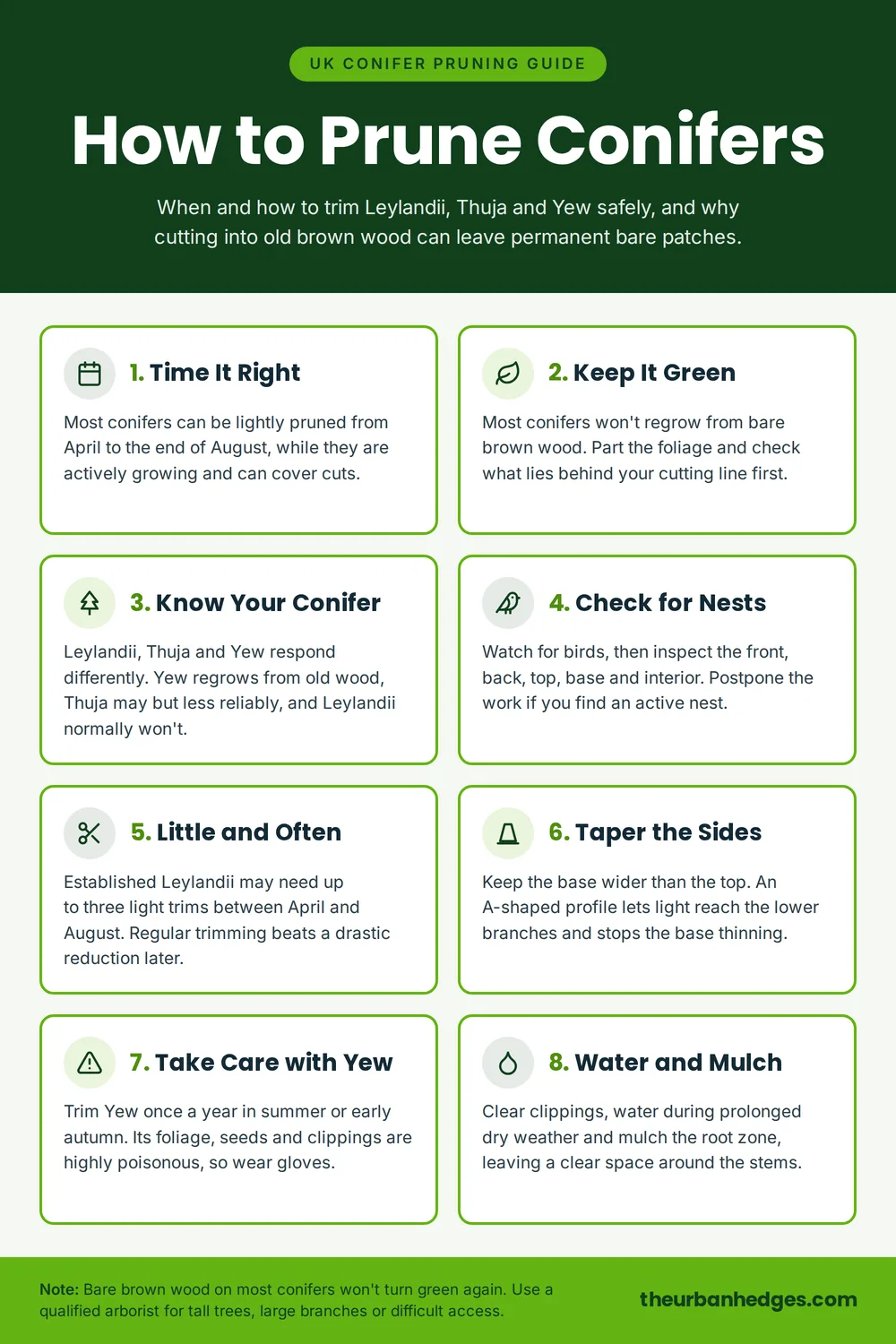
For most conifers, the safest period for routine pruning is from April to the end of August. The plants are actively growing during this period and are better able to cover light trimming cuts with new foliage.
There is no single pruning date that suits every conifer. The best time to trim conifers depends on whether you are maintaining a hedge, controlling a young tree, removing damaged growth or reducing an overgrown plant.
Avoid pruning during severe frost, extreme heat or prolonged dry weather. These conditions place the plant under additional stress and may increase the risk of browning.
| Conifer or task | Recommended period | Important limitation |
|---|---|---|
| General maintenance | April to the end of August | Cut only into healthy green growth |
| Leylandii hedging | Up to three light trims between April and August | Bare old wood will not normally regrow |
| Thuja hedging | Spring to late summer | Recovery from old wood is possible but unreliable |
| Yew hedging | Summer or early autumn | More tolerant of hard pruning than most conifers |
| Overgrown conifers | Depends on the species and condition | Major cuts can leave permanent bare areas |
| Dead or damaged branches | Remove when necessary if safe | Avoid unnecessary major cuts during stressful weather |
Dormancy is not automatically the correct pruning period for every conifer. Identify the species rather than relying on a general rule about winter pruning.
The calendar must also be balanced against wildlife protection. If you find an active bird nest, postpone the work regardless of the month.
Trimming removes the current season’s green growth to keep an established hedge at its required height and width. It is normally carried out with hand shears or a hedge trimmer and should leave a green, leafy finish.
Selective pruning removes individual branches with secateurs or loppers. It may be used to correct uneven growth or remove damaged and crossing branches.
Formative pruning takes place while a hedge or tree is young. It establishes a balanced structure and encourages dense growth. Hard pruning or renovation removes older wood and carries much more risk, particularly with Leylandii and other conifers that cannot regenerate from bare branches.
Regular maintenance trimming is usually safer than allowing a conifer hedge to become oversized and attempting a severe reduction later.
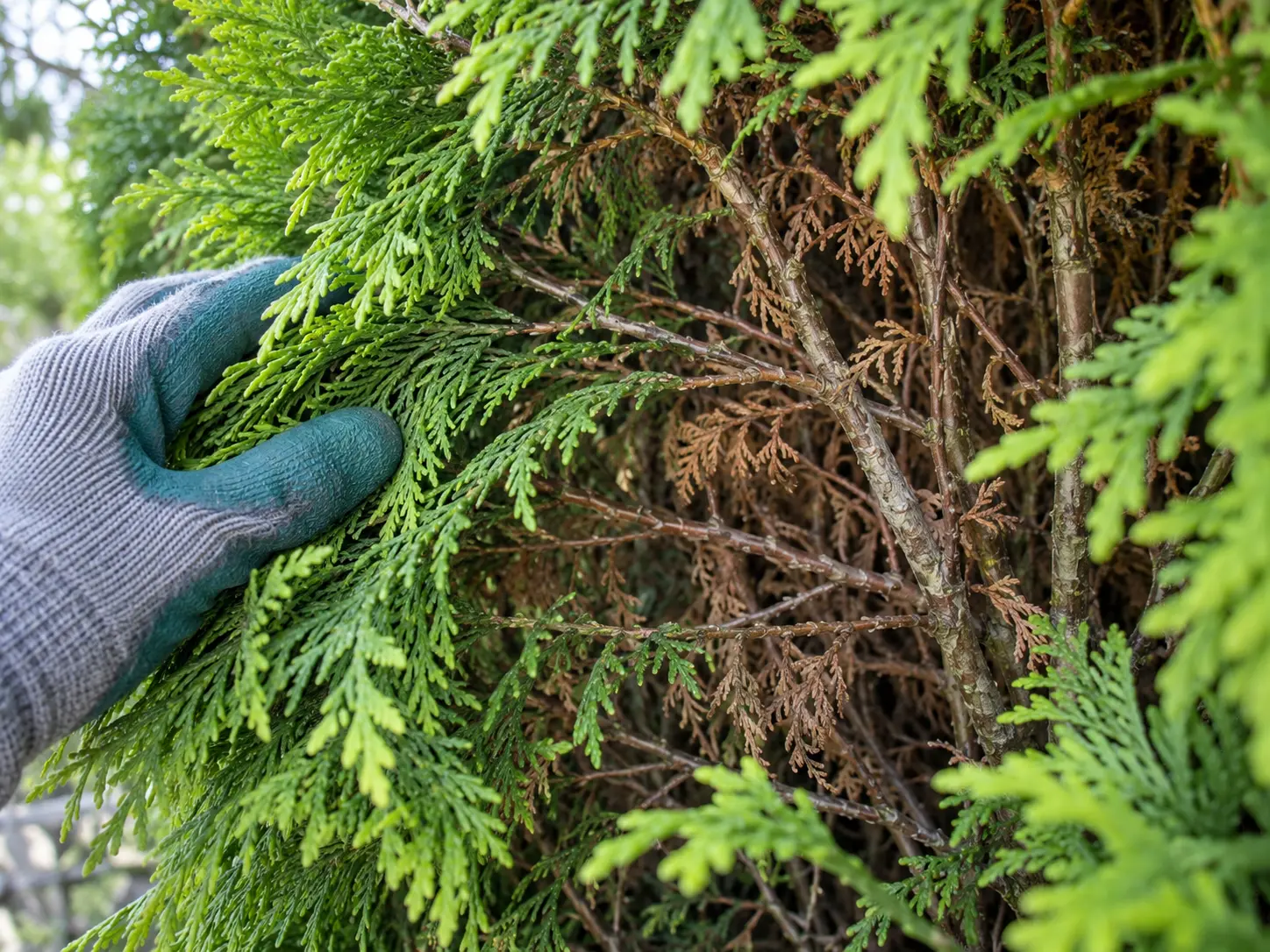
Most conifers will regrow after a light trim that leaves healthy green foliage. They will not normally regenerate if they are cut back into old, bare or brown wood.
The green outer layer contains the active growing points that produce new shoots. Older branches inside the plant may have no suitable buds from which to recover. Cutting back conifers beyond their green foliage can therefore leave permanent gaps.
Yew is the main exception. Yew, or Taxus baccata, can produce new shoots from old wood and is much more suitable for careful renovation. Thuja, also known as arborvitae, may regenerate from older wood, but recovery is less reliable and should not be assumed.
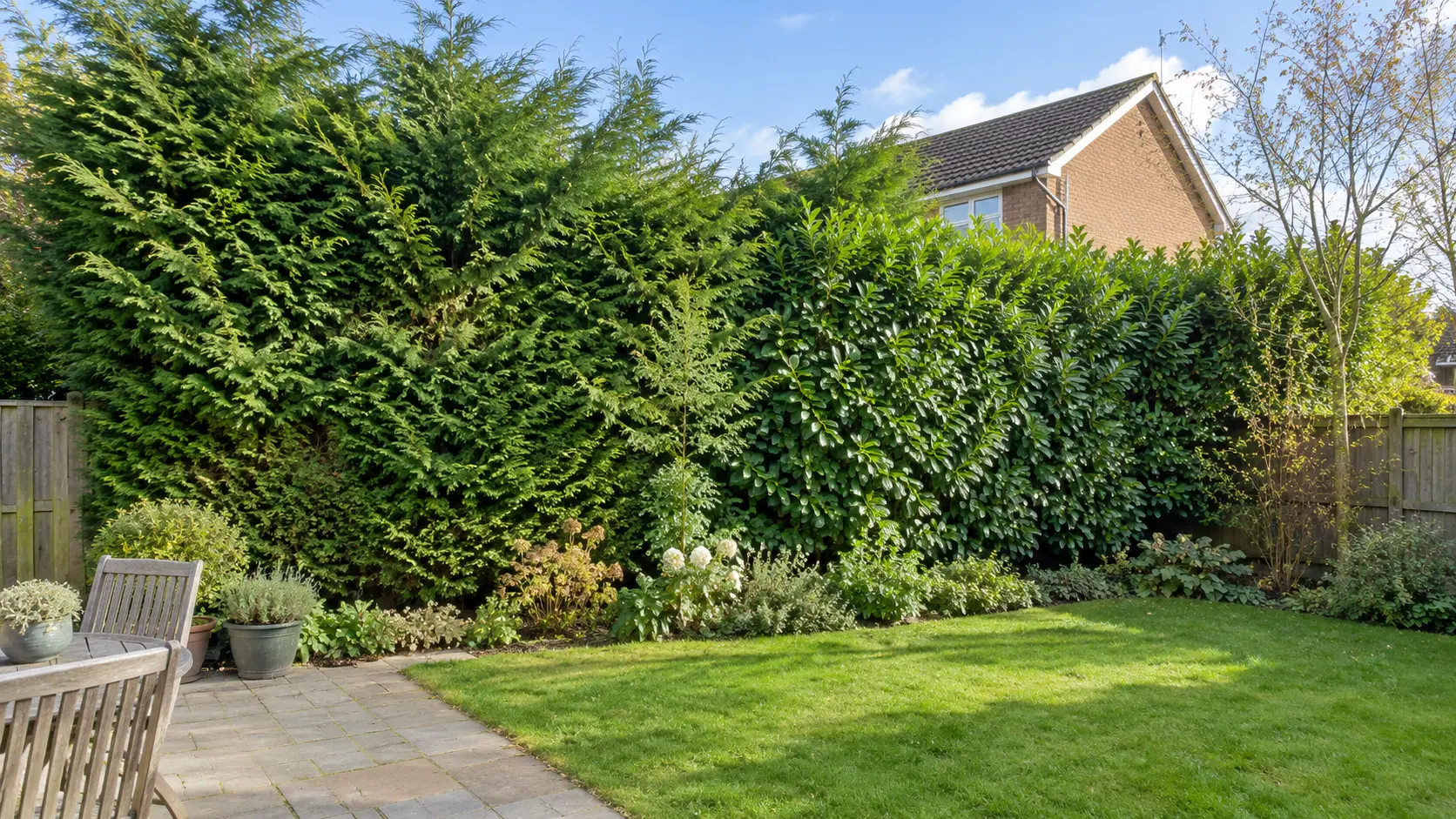
Leylandii, or Leyland cypress (Cupressus × leylandii), does not normally regenerate from bare old wood. A deep cut can leave a permanent brown strip across the hedge.
Before reducing a hedge, part the foliage and examine the proposed cutting line. If a cut would expose mainly leafless branches, the hedge is unlikely to regain an even green surface.
The RHS guidance on growing and pruning conifers provides further information about green growth and old-wood recovery.
Choose tools according to the thickness of the growth and the level of control required:
Use sharp, well-maintained equipment. Blunt blades can crush growth and leave untidy cuts.
Do not stretch from an unstable ladder while holding powered equipment. Tall evergreen trees, difficult access, overhead cables and work beside roads or public paths may require a suitably qualified professional.
The following process covers routine conifer hedge pruning and light maintenance.
Leylandii, Thuja and Yew are all conifers, but they do not respond to pruning in the same way.
| Conifer | Routine approach | Old-wood tolerance |
|---|---|---|
| Leylandii | Regular light trimming of green growth | Poor |
| Thuja | Light trimming and formal shaping | Possible but unreliable |
| Yew | Annual clipping or careful renovation | Good |
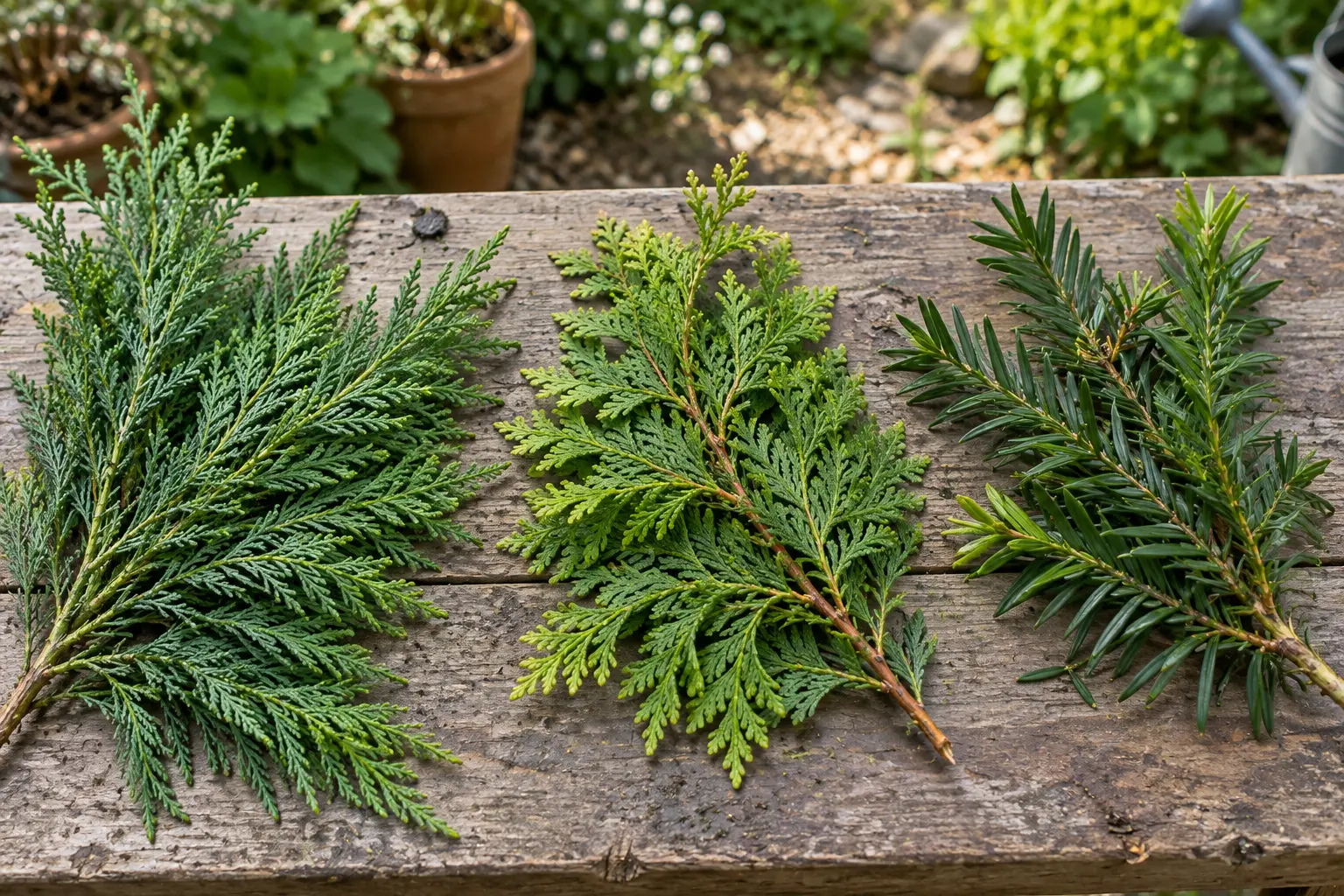
Leylandii is a fast-growing evergreen tree commonly used for screening. Established Leylandii hedging may need up to three light trims between April and the end of August.
While a young hedge develops, trim the side shoots to encourage dense growth but allow the leading shoots to continue until the hedge approaches the required height. Once that height is reached, the central leaders can be shortened so the top thickens.
Always leave green foliage across every trimmed surface. Leylandii will not normally grow back from bare old wood.
A healthy overgrown hedge may sometimes tolerate a height reduction of up to one-third in April. Reducing its width is often more difficult because the green outer layer may be shallow. Seek professional advice if the proposed cut would expose brown branches. The RHS Leylandii pruning guide provides further species-specific guidance.
Thuja includes several evergreen trees used for hedging, including western red cedar, or Thuja plicata. Prune Thuja hedging during spring or summer, taking back the current green growth while leaving healthy foliage beneath the cuts.
Thuja is well suited to regular formal shaping. Keep the hedge wider at the base and use hand shears where more control is needed around sparse areas.
Some Thuja may produce shoots from older branches, but recovery is less dependable than with Yew. Do not make a deep cut simply because regrowth might be possible.
Yew hedging can usually be trimmed once a year during summer or early autumn. Formal hedges may be clipped more frequently to maintain a precise shape.
Unlike most conifers, Yew can regenerate from old wood. This makes it suitable for the careful renovation of neglected hedges, although major work may still need to be staged.
Yew foliage, seeds and clippings are highly poisonous if eaten. Wear gloves and keep cut material away from children, pets and livestock. The RHS Yew growing guide contains further care and pruning guidance.
Pruning overgrown conifers begins with identifying the species and checking how much healthy foliage remains.
Height reduction and width reduction are not the same. An overgrown Leylandii may retain green foliage below a proposed top cut, making a controlled height reduction possible. Its sides may contain only a thin outer layer of green growth, leaving little room to reduce the width.
Yew is more suitable for hard renovation because it can regenerate from old wood. Thuja may recover in some circumstances, but the result is less predictable.
Pines, firs, spruces and junipers have their own growth habits and should be identified before major pruning. If a plant has completely outgrown its available space, replacement may produce a better long-term result than an extreme cut.
Pruning large conifers or removing the central leader from a specimen tree can permanently change its structure. Consult a qualified arborist or tree surgeon where the work involves height, large branches or difficult access.
Avoid these common mistakes:
A small, cautious trim can be corrected later. An excessively deep cut into old wood may be permanent.
Dense conifer hedges provide sheltered nesting sites. Before pruning, watch for bird activity and inspect deep inside the foliage.
Under the Wildlife and Countryside Act 1981, it is an offence to intentionally damage or destroy the nest of a wild bird while it is being built or used. Active nests remain protected regardless of the date.
For more information, read our UK hedge-cutting calendar and nesting-bird guidance.
Remove loose clippings from the top and interior of the hedge. This allows light and air to reach the remaining foliage and makes accidental damage easier to see.
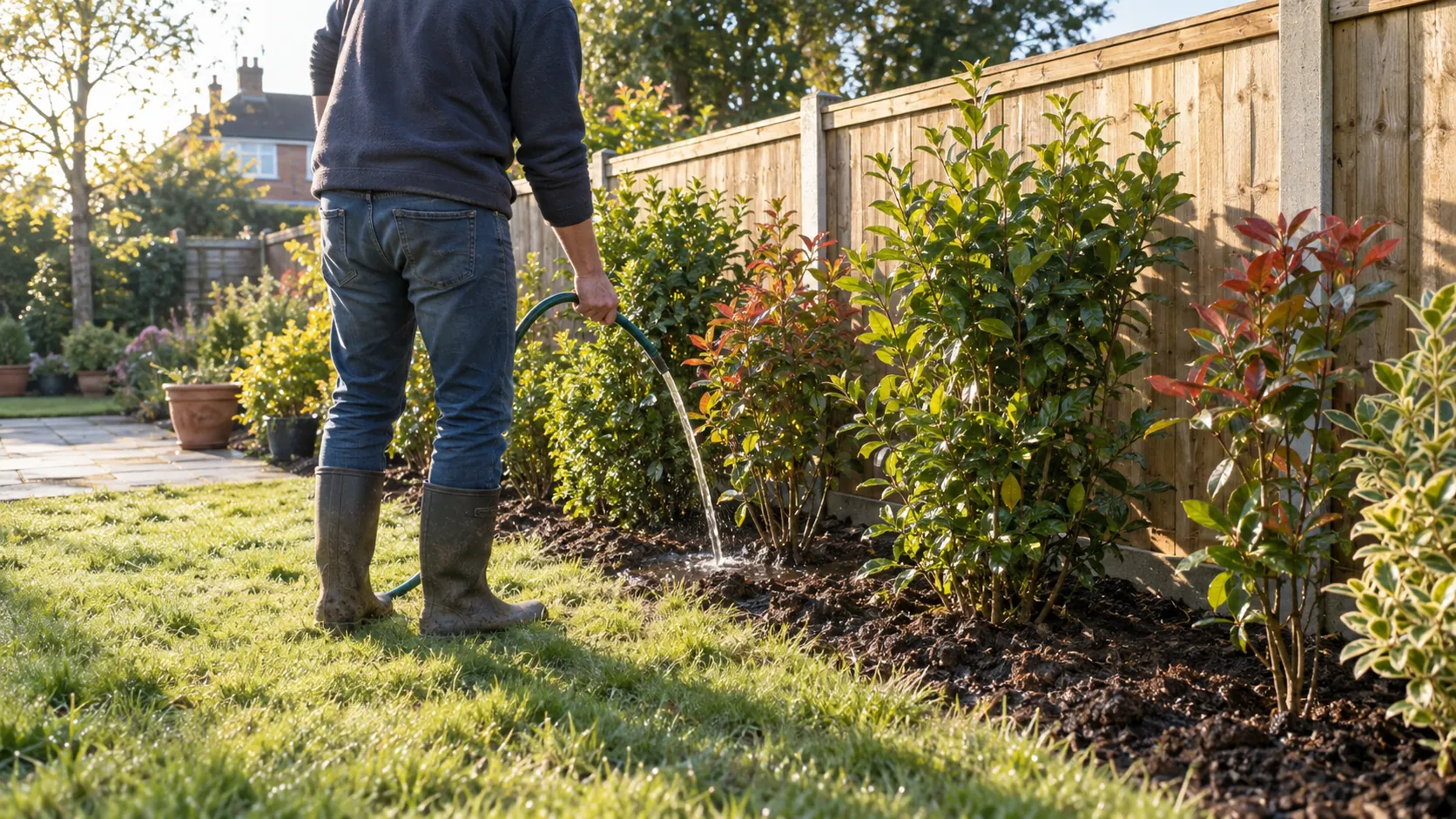
Water during prolonged dry weather, particularly after a substantial trim. Apply organic mulch around the root zone to help retain moisture, leaving a clear gap around the stems or trunks.
Avoid immediately making another heavy cut because the first result appears uneven. Allow the plant time to respond before making minor corrections within healthy green growth.
Monitor the foliage for browning. Brown needles may result from drought stress, frost, pests, disease or excessive pruning. Bare old wood will not normally turn green again, although surrounding growth may gradually disguise a small gap.
What month should conifers be pruned in the UK?
Many conifers can be lightly pruned from April to the end of August. The best month depends on the species and the purpose of the work. Leylandii is commonly trimmed during the growing season, while Yew can also be clipped in early autumn.
Can you cut the top off a conifer?
The leading shoot can be shortened when a hedge reaches its required height. Removing the top of a specimen tree may permanently alter its shape, so major height reductions should be planned carefully and may require professional advice.
Will a conifer grow back after being cut?
A conifer will usually regrow after a light trim that leaves healthy foliage. Most species will not regenerate from bare brown wood. Yew is the principal exception, while recovery from older wood in Thuja is possible but less reliable.
Can a brown conifer turn green again?
Brown foliage itself will not normally turn green again. Recovery depends on the cause and whether the branch remains alive. A Leylandii branch cut back to bare old wood will usually stay bare, although nearby healthy growth may eventually soften a small gap.
How far can you cut back Leylandii?
Routine trimming should remove only green growth. A healthy overgrown Leylandii hedge may sometimes tolerate a height reduction of up to one-third in April, but the sides should not be cut beyond their green foliage.
Can overgrown conifers be reduced?
Some can, but not every overgrown conifer can be restored as a smaller green hedge. Yew tolerates renovation better than most. Leylandii cannot normally regenerate from bare wood, making substantial width reduction particularly risky.
How often should conifer hedges be trimmed?
Fast-growing Leylandii may require two or three light trims during the growing season. Thuja is commonly trimmed once or twice, while an established Yew hedge can often be maintained with one summer or early-autumn trim.
Can conifers be pruned during winter?
Winter is not the best universal pruning period for conifers. Frost can damage newly exposed growth. Minor removal of dead or hazardous branches may be possible when conditions are suitable, but routine trimming of many conifers is better carried out from April to August.
Pruning conifers successfully starts with identifying the species, choosing the right time and understanding what the plant can tolerate. Keep most cuts within healthy green growth, treat Yew differently where renovation is required and never rely on the calendar without checking for active nests.
Browse our range of established conifers or compare evergreen hedging plants for different screening and maintenance requirements.
If you are comparing Leylandii, Thuja and Yew before planting, read our guide to fast-growing evergreen trees and hedges for privacy for differences in growth rate, coverage and maintenance.