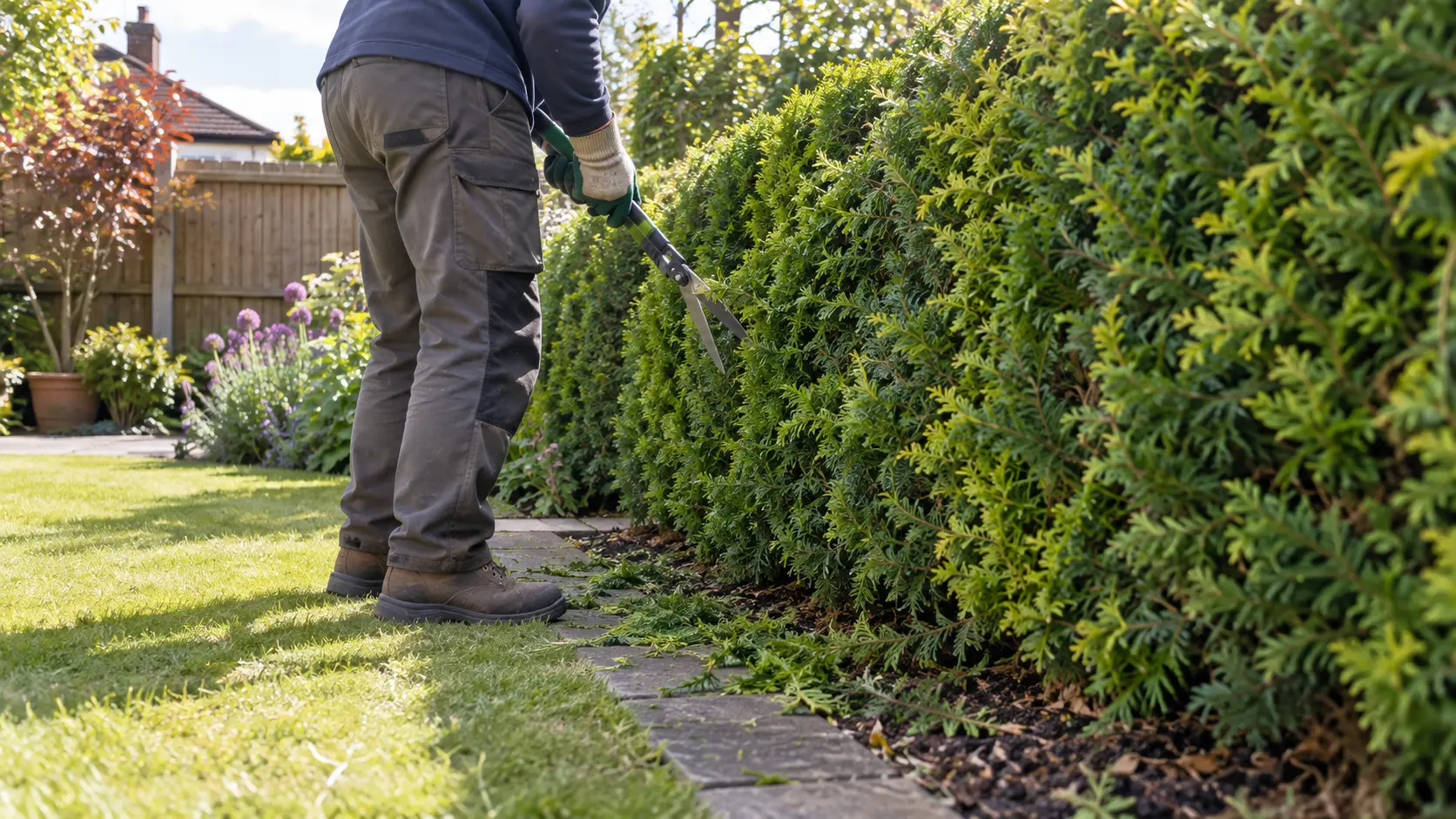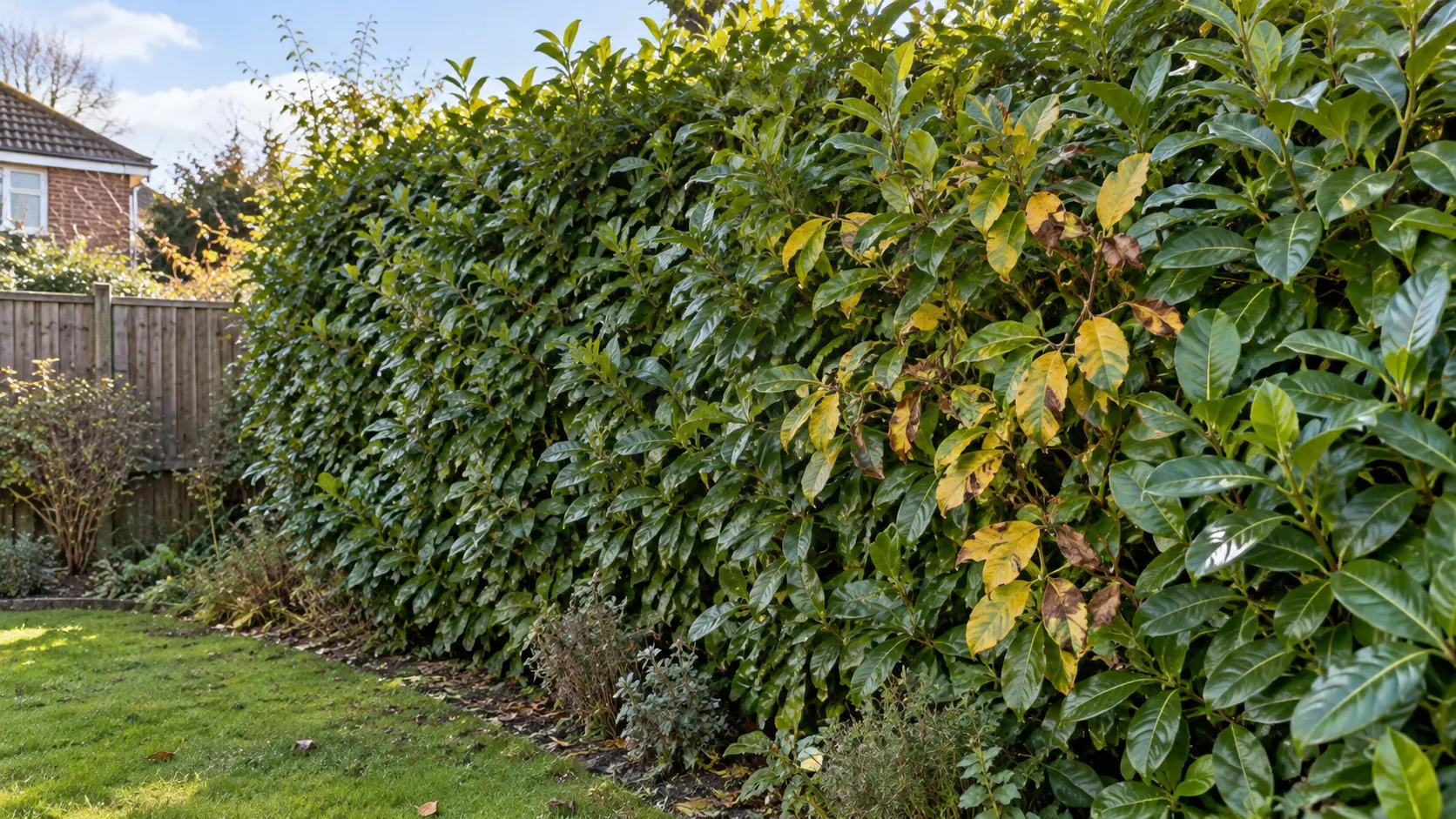


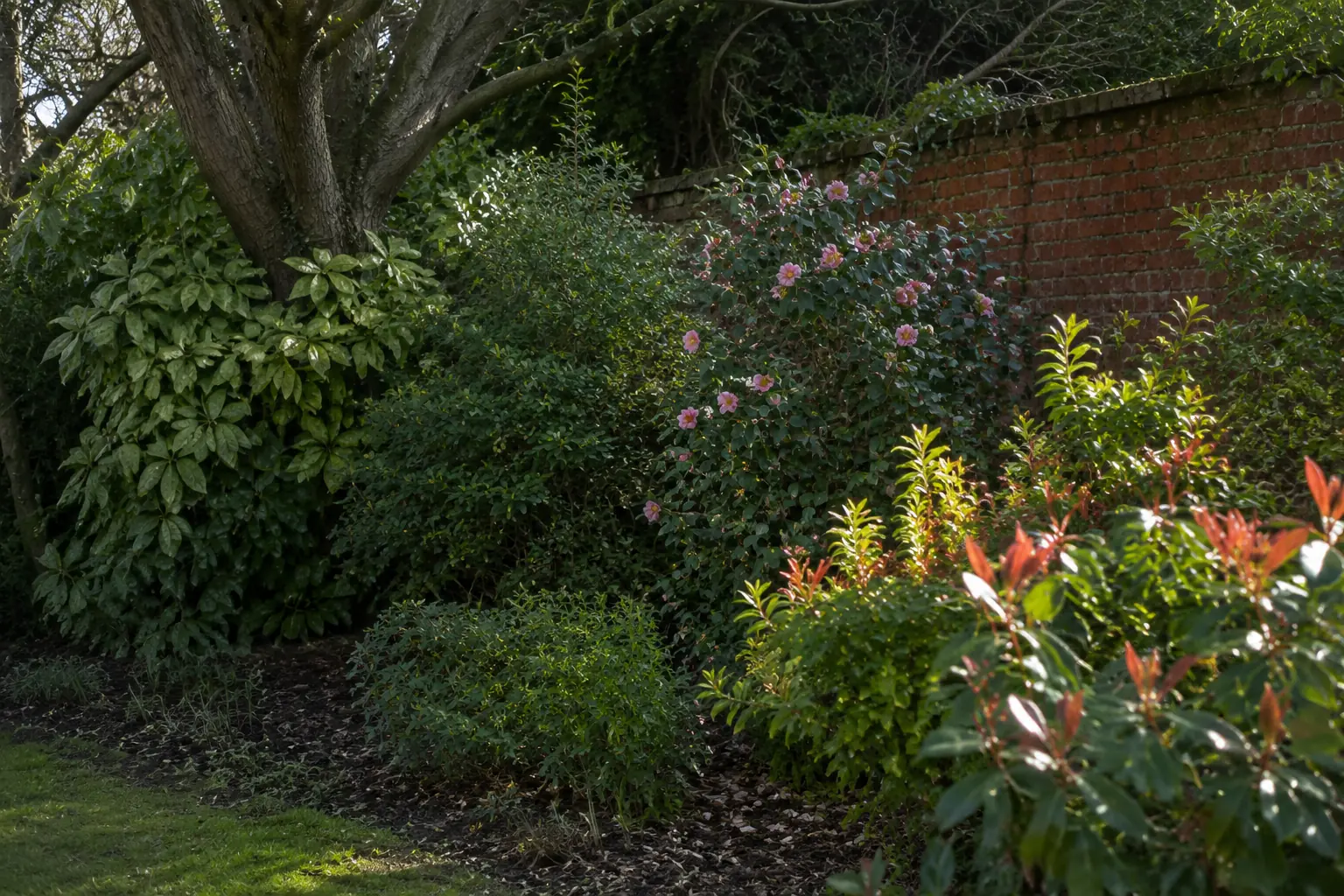
The best evergreen shrubs for shade in UK gardens include Cherry Laurel, Portuguese Laurel, Camellia Sasanqua and Photinia Red Robin. Cherry Laurel is a strong choice for dense evergreen screening, while Camellia Sasanqua provides glossy foliage and autumn flowers in sheltered partial shade. Portuguese Laurel suits formal hedging, and Photinia adds colourful young foliage in lighter shade.
The right plant depends on the amount of light available, the soil, the desired height and whether your priority is flowers, foliage or privacy.
Browse our current range of evergreen shrubs for sale or use the guide below to compare the most suitable options.
| Evergreen shrub | Suitable shade level | Main benefit | Best use |
|---|---|---|---|
| Cherry Laurel | Partial to heavier shade | Dense, fast-growing foliage | Privacy hedging and screening |
| Portuguese Laurel | Partial shade | Refined evergreen foliage | Formal hedging and structured planting |
| Camellia Sasanqua | Sheltered partial or dappled shade | Autumn and early-winter flowers | Feature planting and informal screening |
| Photinia Red Robin | Light or partial shade | Bright red young foliage | Colourful hedging and mixed borders |
All plants need some natural light. Even shade-tolerant shrubs may grow more slowly or flower less in a position that remains dark throughout the day.
Before choosing an evergreen shrub, determine what kind of shade the planting position receives.
Light shade receives good natural light but little direct sun. It may be caused by a wall, fence or open tree canopy.
Camellia Sasanqua, Portuguese Laurel and Photinia Red Robin can all be suitable, depending on the soil and exposure.
Partial shade normally receives direct sunlight for part of the day and shade for the remainder.
This is the most flexible type of shade. It can suit Camellia Sasanqua, Cherry Laurel, Portuguese Laurel and Photinia Red Robin.
Dappled shade occurs beneath trees or open foliage where light filters through during the day.
Camellia Sasanqua can work well in sheltered dappled shade, provided it has suitable soil and does not have to compete excessively with large tree roots.
A deeply shaded position receives little direct sunlight. It may be beside a north-facing wall, between buildings or beneath dense tree cover.
Cherry Laurel is generally the most adaptable option from this range for heavier shade. However, its growth may be slower and flowering may be reduced where light is very limited.
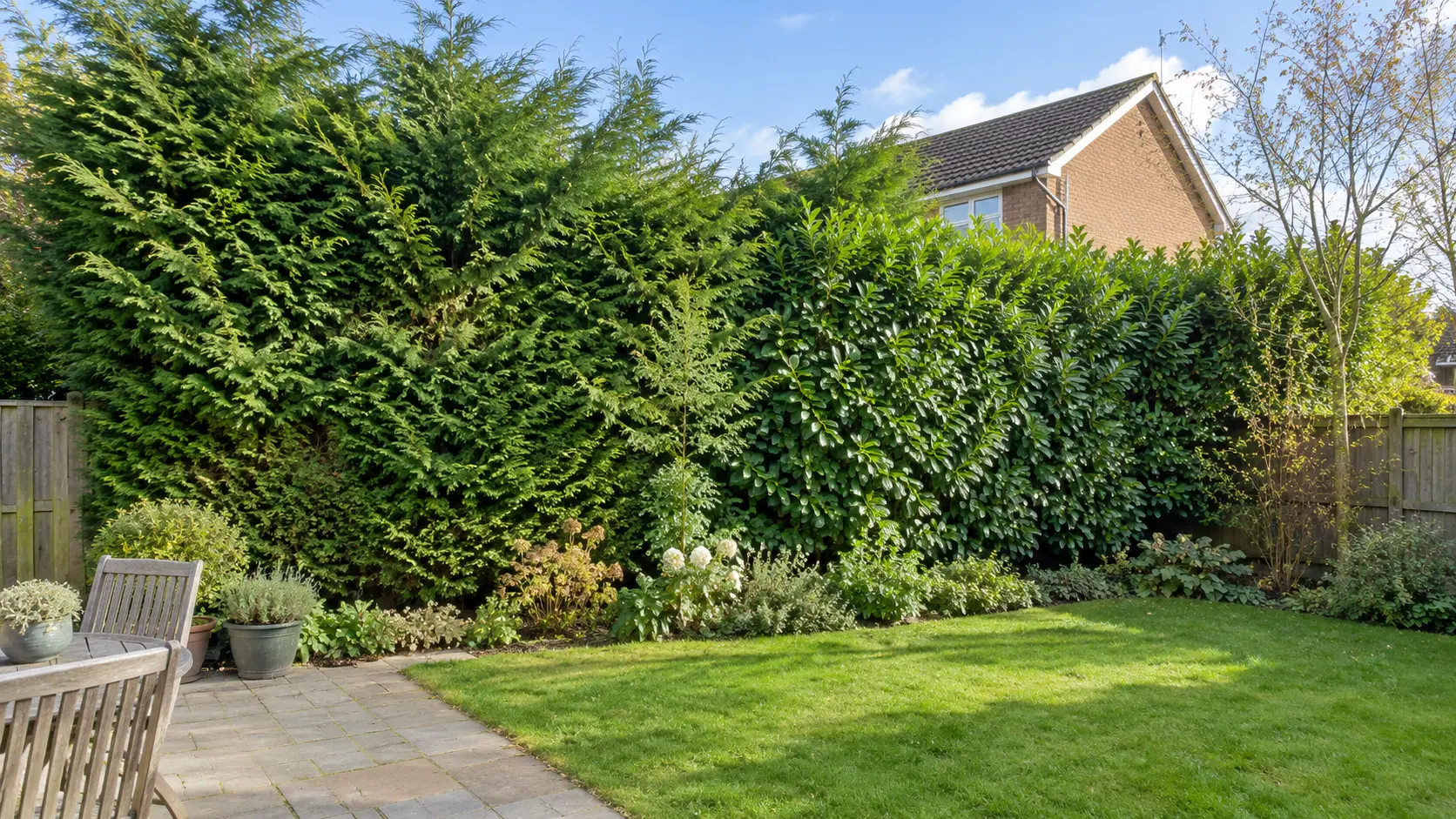
Cherry Laurel is one of the most useful tall evergreen shrubs for shade when privacy and dense foliage are the main objectives.
Its large, glossy leaves form a substantial evergreen screen. Established plants may also produce upright clusters of small white flowers in spring.
Cherry Laurel is particularly suitable for:
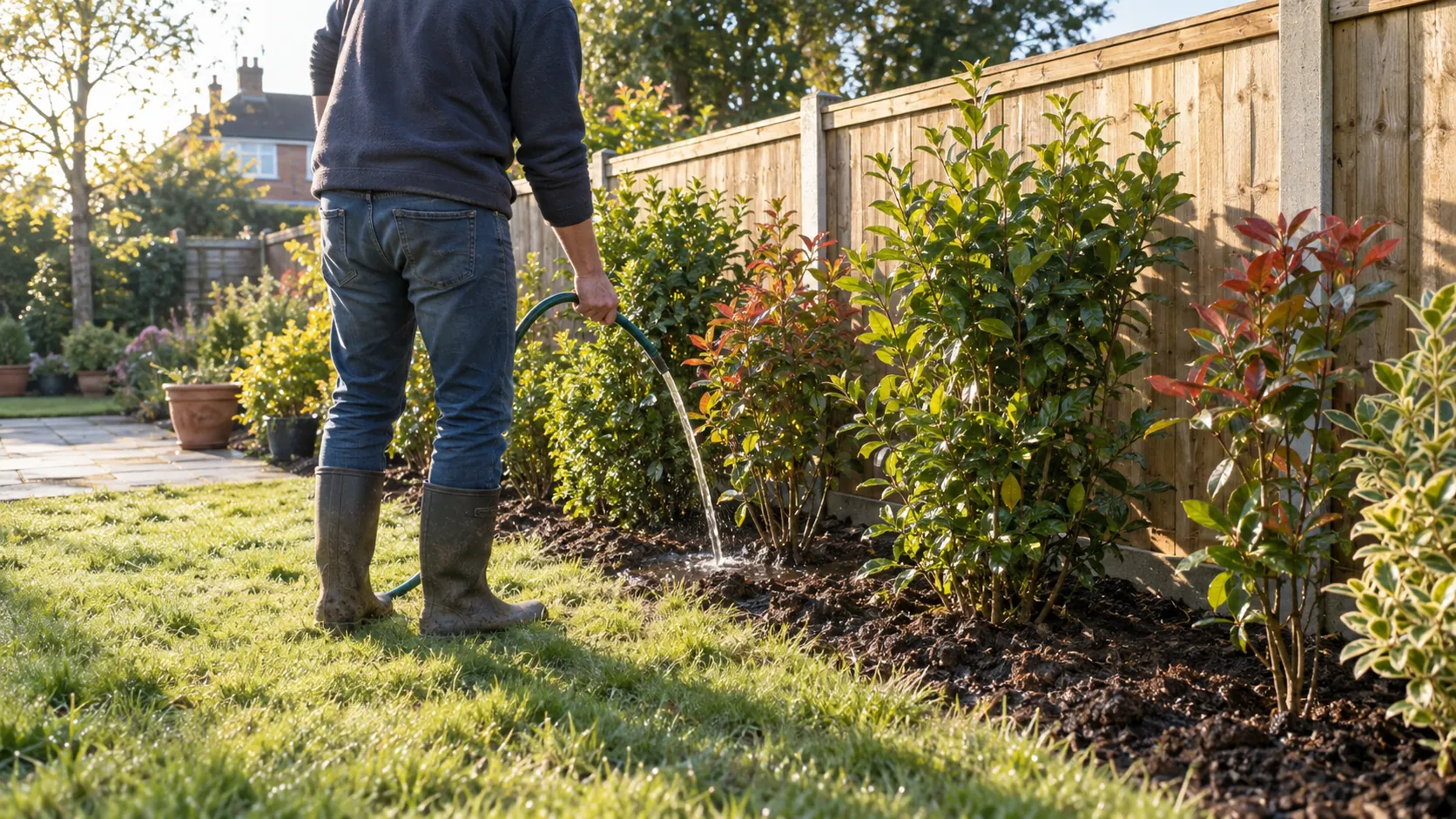
Although Cherry Laurel tolerates shade, newly planted shrubs still need regular watering. This is particularly important near walls and mature trees, where the surrounding soil can remain dry.
Cherry Laurel grows vigorously in suitable conditions and can become a large hedge. Allow enough space for its eventual width and plan for regular trimming.
Browse the available range of Cherry Laurel hedging plants, including:
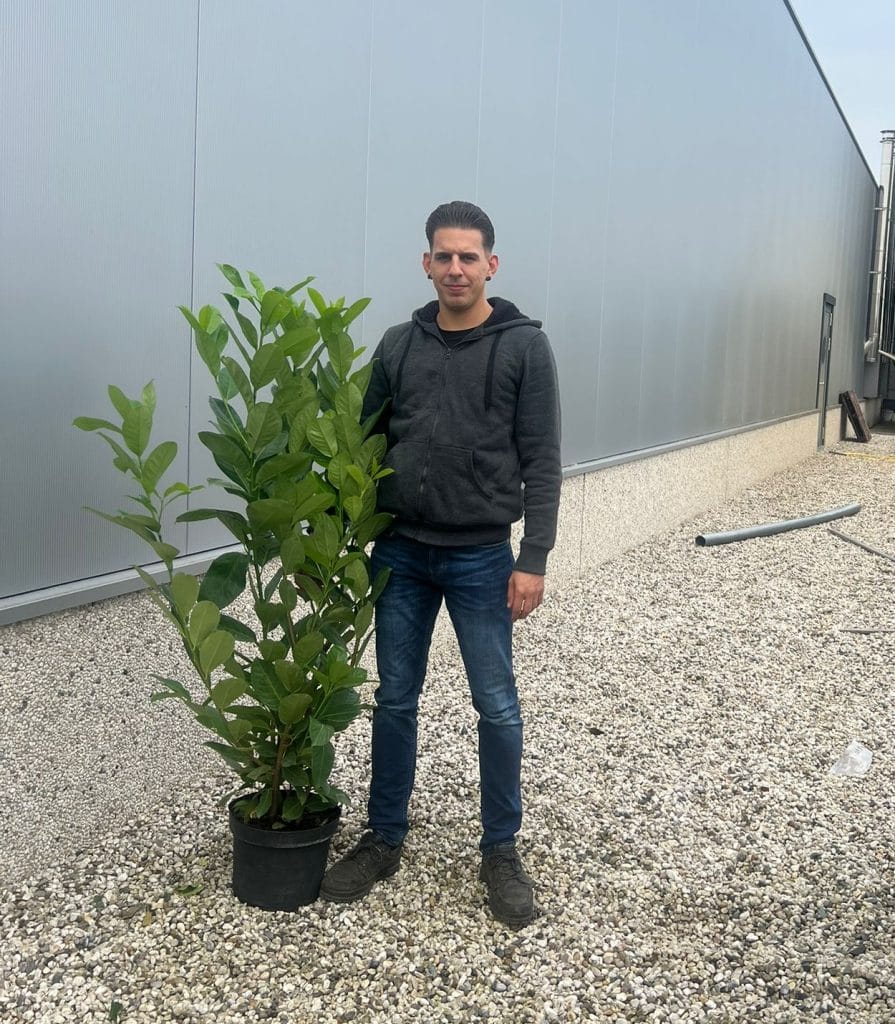
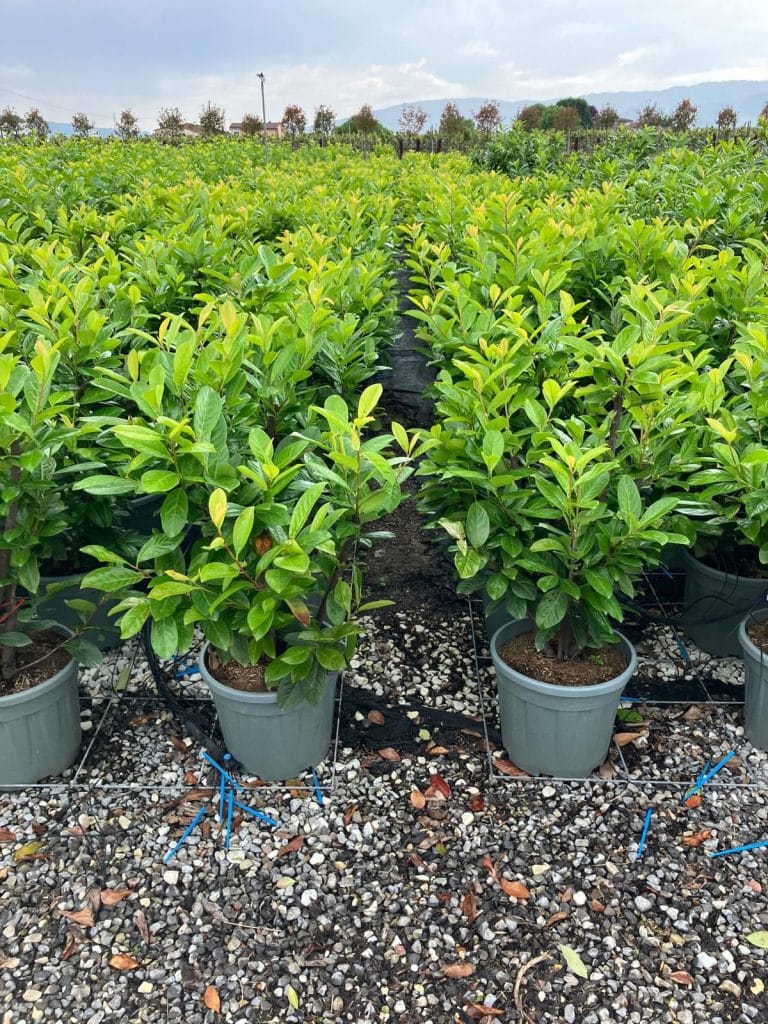
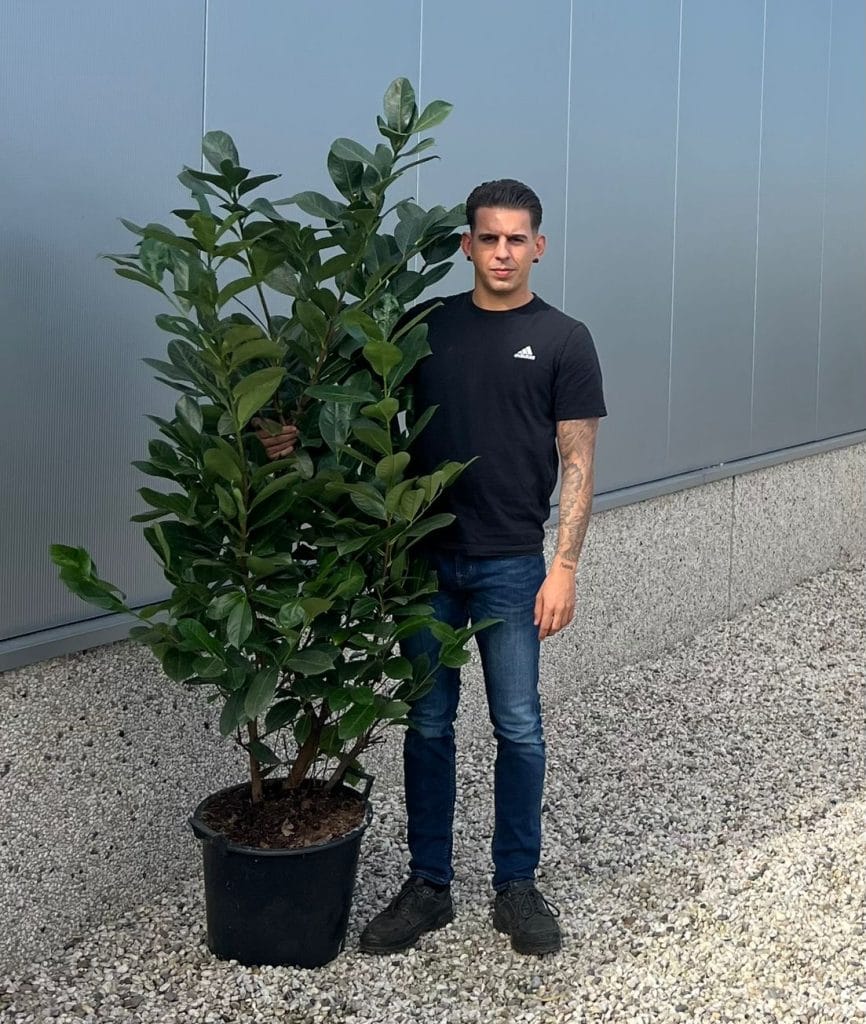
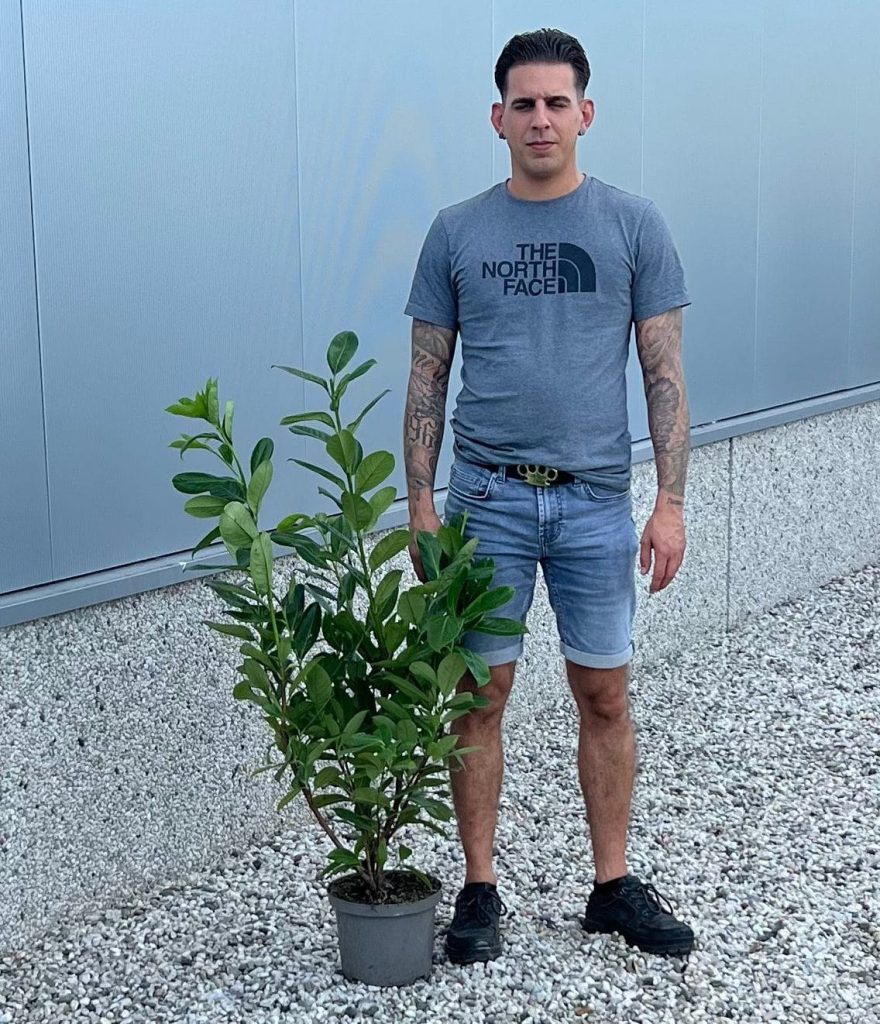
Larger plants can provide more immediate coverage, but they still require careful planting and consistent watering while their roots establish.
Once established, follow our guide to pruning a Laurel hedge to keep its height and width under control.
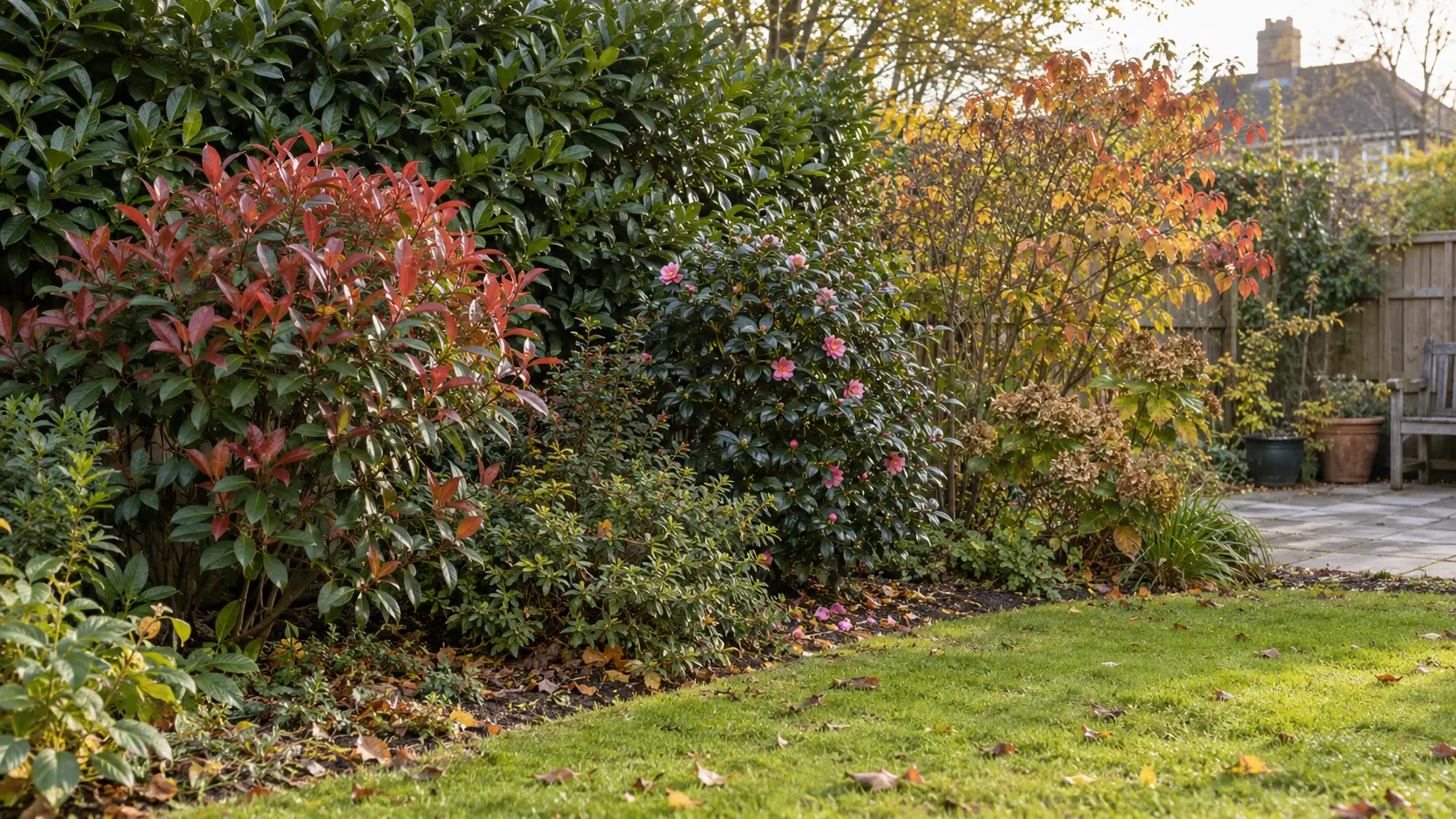
Camellia Sasanqua is an excellent evergreen flowering shrub for a sheltered position with partial or dappled shade.
Its glossy evergreen foliage provides year-round structure, while its flowers add colour during autumn and early winter. This makes it particularly valuable when many spring- and summer-flowering plants have finished.
Camellia Sasanqua works well:
It generally flowers best in a bright but sheltered position. Partial shade is suitable, but very deep shade may reduce the number of flowers.
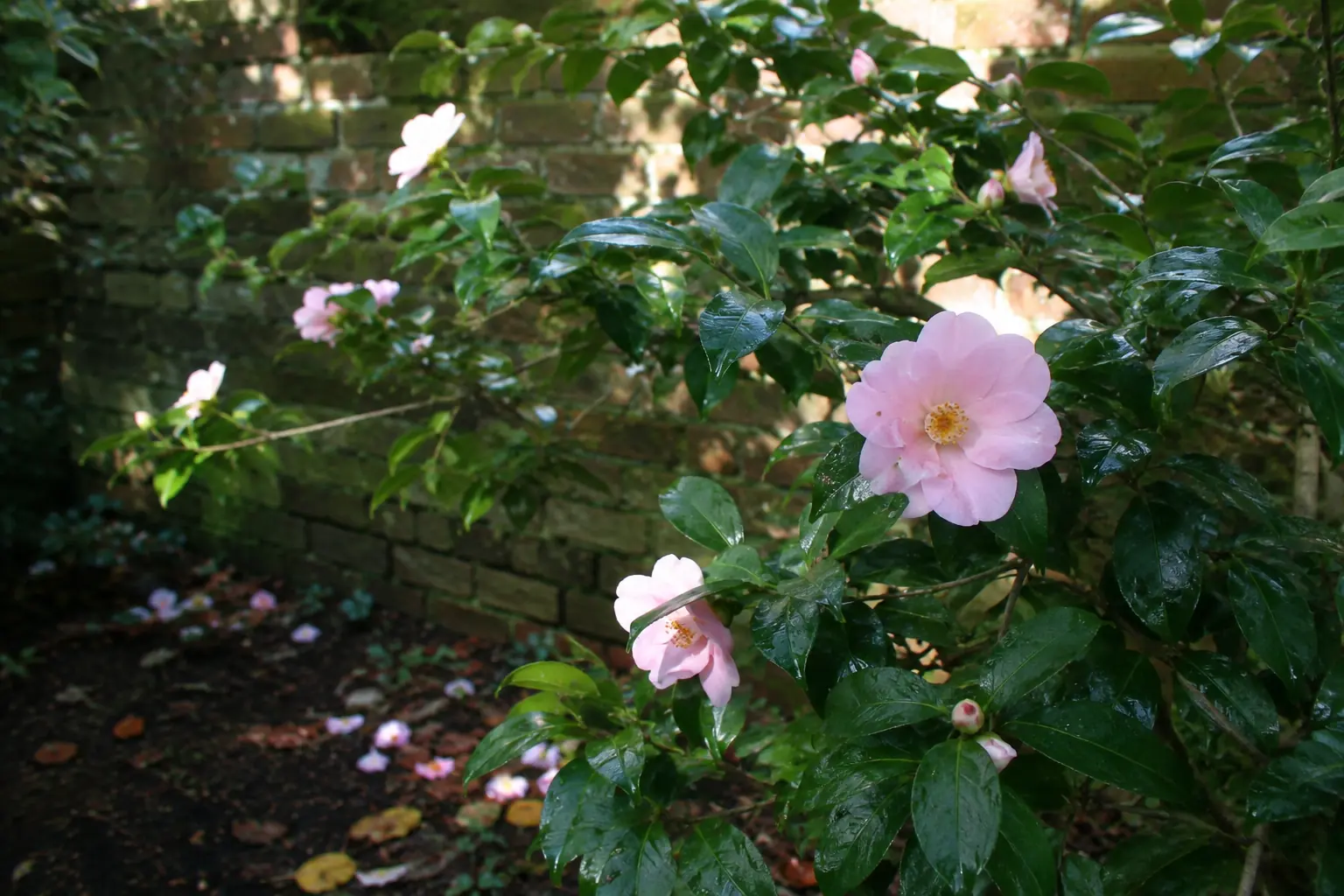
Camellias prefer acidic conditions and moist but well-drained soil. They may struggle in strongly alkaline or chalky ground. If the garden soil is unsuitable, growing Camellia Sasanqua in a large container with ericaceous compost may be a better option.
The Urban Hedges currently stocks two established sizes:
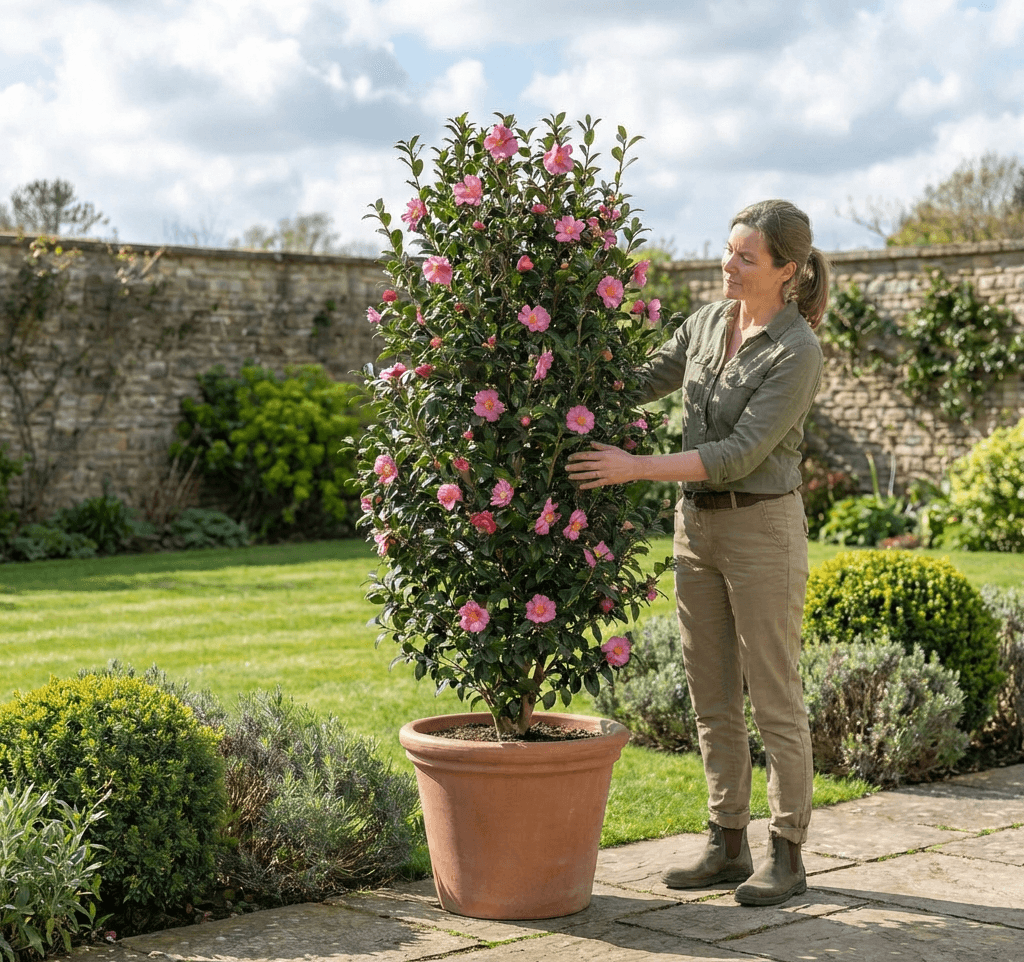
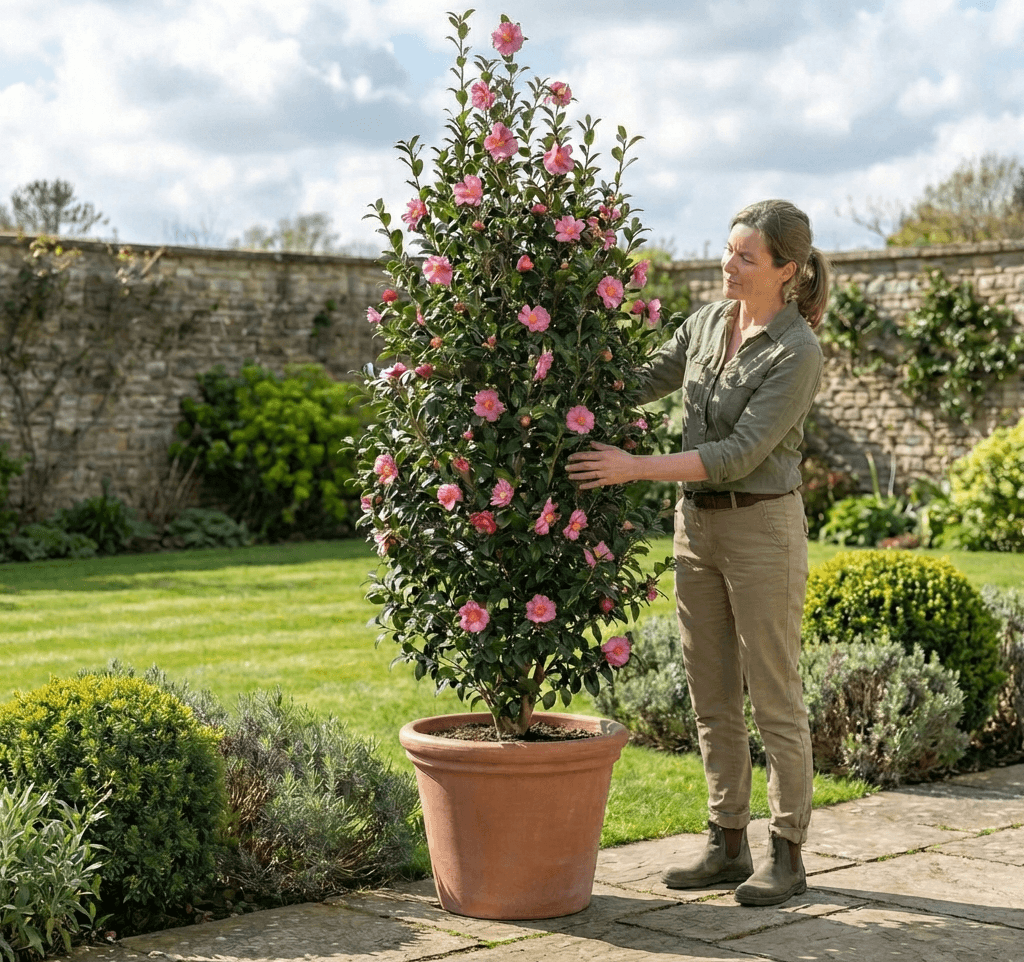
Choose Camellia Sasanqua when flowering interest and ornamental value are more important than creating the fastest possible hedge.
Portuguese Laurel is a strong choice for formal hedging and structured planting in partial shade.
It has smaller, darker leaves than Cherry Laurel, often accompanied by contrasting reddish stems. Established plants can produce clusters of small white flowers in late spring or early summer.
Portuguese Laurel is suitable for:
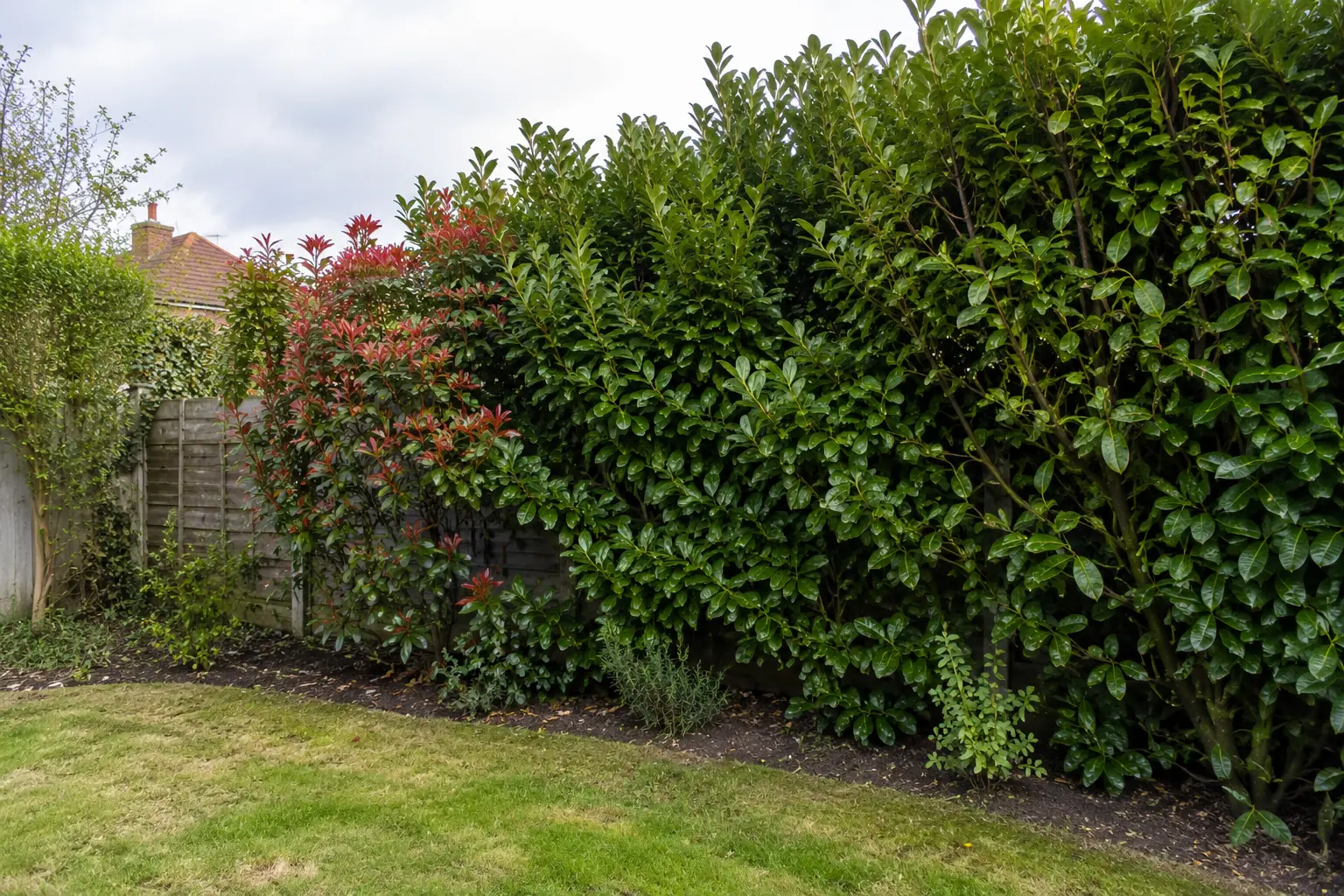
It usually creates a more refined appearance than broad-leaved Cherry Laurel. It is a good option where year-round screening is needed but a neater, more formal effect is preferred.
Browse Portuguese Laurel plants in several established sizes:
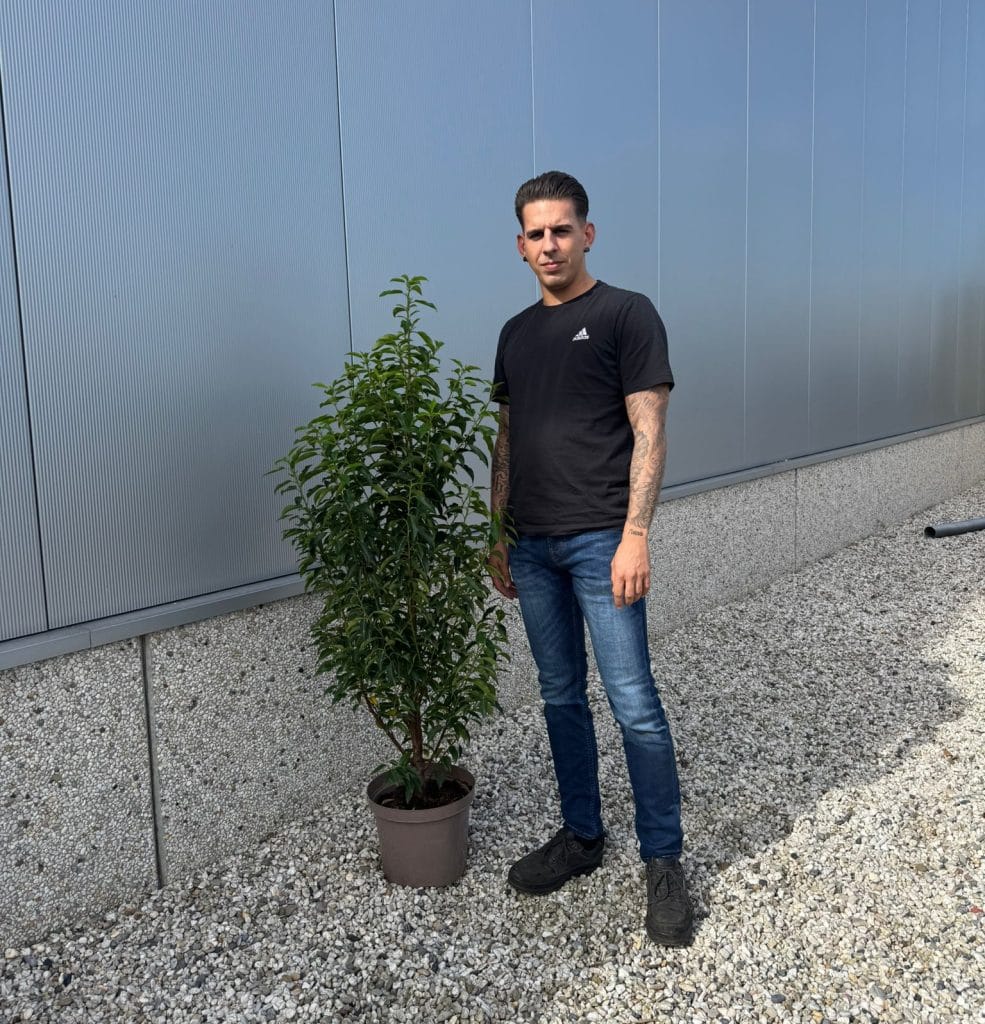
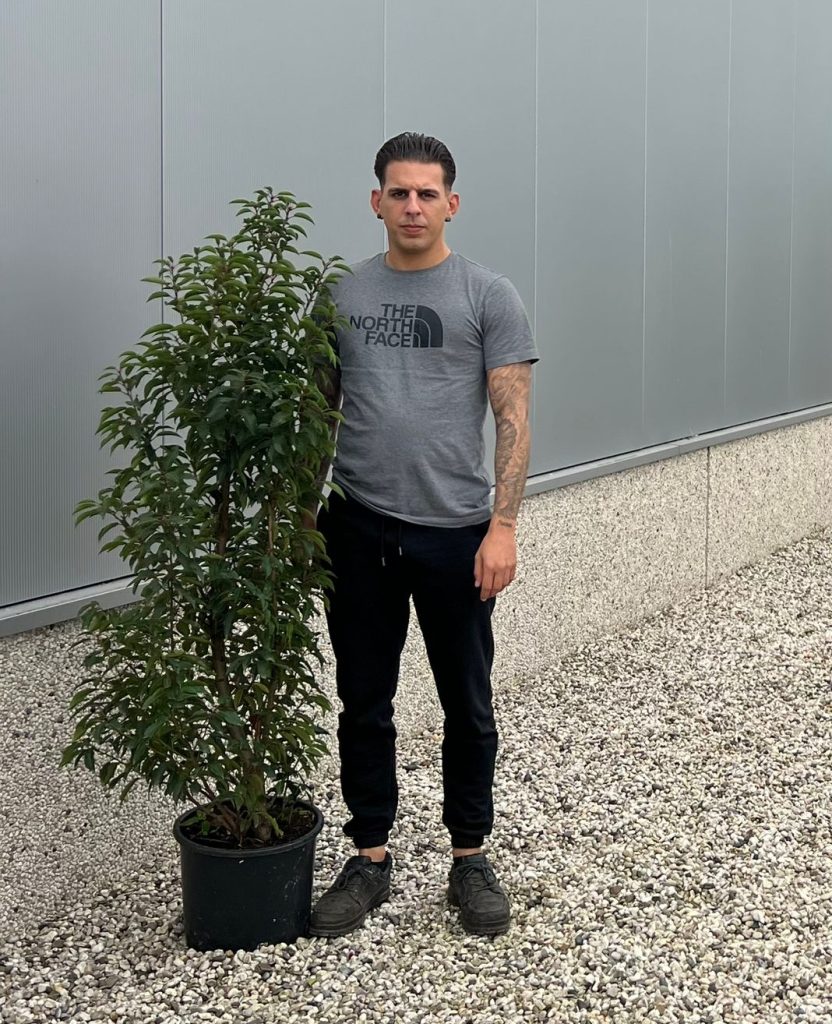
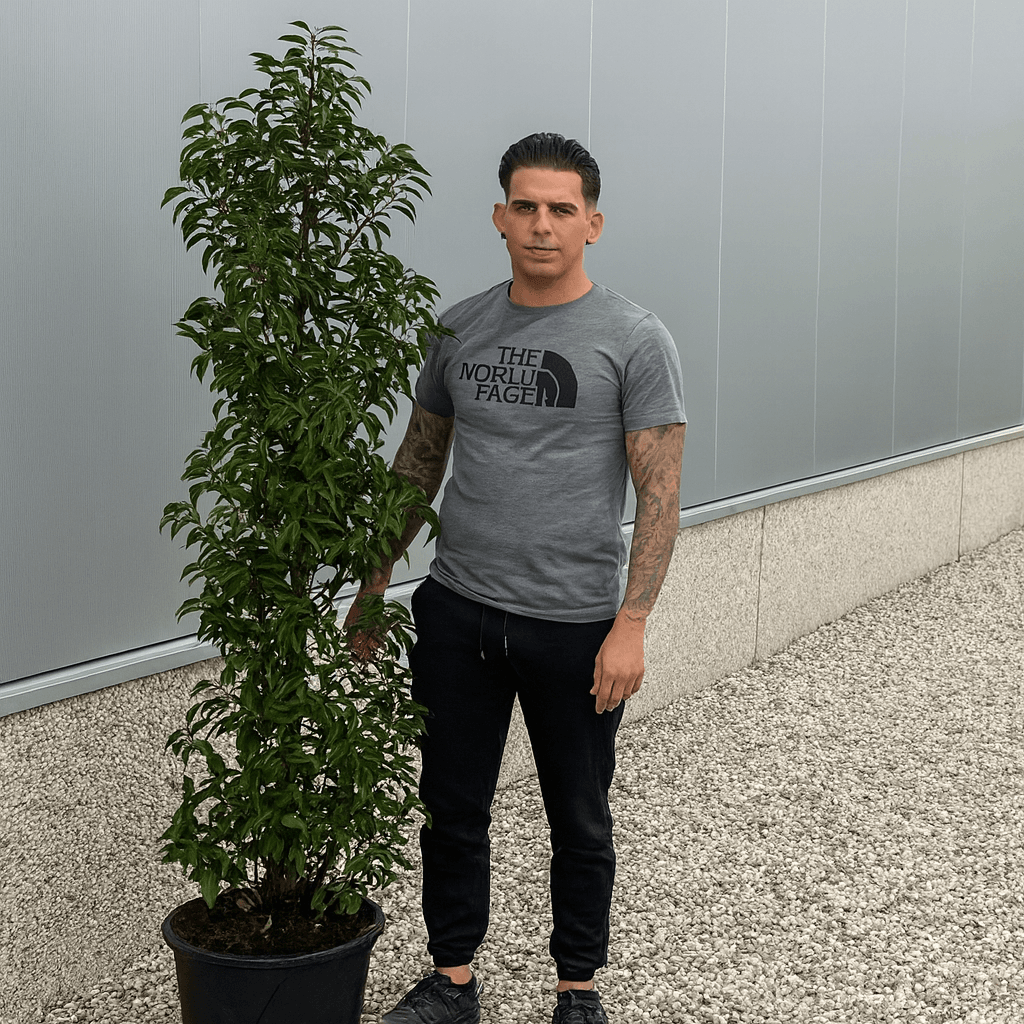
Photinia Red Robin is best known for its bright red young foliage. Established plants may also produce clusters of small, creamy-white flowers in spring.
It can grow in light or partial shade, although its red foliage colour and flowering are usually strongest in brighter conditions. It is therefore better suited to lightly shaded gardens than to permanently dark positions.
Photinia Red Robin is useful for:
Regular light pruning encourages fresh growth, which produces the distinctive red foliage.
See the available range of Photinia Red Robin plants, including established plants suitable for hedging and screening.
Camellia Sasanqua is the leading option from the current range when flowers are the priority. It provides autumn and early-winter colour in sheltered partial shade.
The other shrubs also offer seasonal flowers:
However, Cherry Laurel and Portuguese Laurel are usually selected primarily for hedging and screening. Photinia is normally chosen for its colourful foliage. Camellia Sasanqua is the strongest choice when an evergreen shrub with a prominent seasonal flower display is wanted.
For a broader comparison that includes Leylandii, Thuja and other screening choices, see our guide to fast-growing evergreen trees and hedges for privacy.
For a tall evergreen screen in shade, consider Cherry Laurel or Portuguese Laurel.
Cherry Laurel is generally the better option for rapid, dense coverage. Portuguese Laurel is suitable where a more formal appearance and finer foliage are preferred.
Established Camellia Sasanqua plants can also provide immediate height and structure in sheltered partial shade, but they are better used as ornamental features or informal screens than as fast-growing boundary hedges.
Photinia Red Robin can develop into a substantial evergreen shrub in light shade, although its foliage colour is likely to be stronger with more sunlight.
Cherry Laurel is the strongest fast-growing option from the current range. In suitable conditions, it develops dense foliage and can create an effective privacy screen.
Its actual growth rate depends on:
A shade-tolerant plant will not necessarily establish quickly in dry, compacted or waterlogged soil.
Dry shade is more difficult than ordinary shade because plants must cope with both limited light and limited moisture.
It is commonly found:
Cherry Laurel is generally the most adaptable stocked option for a dry, shaded area once established. However, newly planted Laurel cannot be treated as drought tolerant. It requires thorough and consistent watering while its roots grow into the surrounding soil.
Before planting in dry shade:
Camellia Sasanqua is not a good choice for persistently dry soil. It needs suitable moisture and acidic or ericaceous growing conditions.
Camellia Sasanqua is the most relevant option from the current range for growing in a large container in partial shade.
Container growing is particularly useful when:
Use a sufficiently large container with drainage holes and fill it with suitable ericaceous compost. Containers dry out more quickly than garden soil, so check moisture regularly and water when needed.
Avoid leaving the roots permanently waterlogged. The container should drain freely, particularly during wet winter weather.
Established Laurel and Photinia plants can become too large for ordinary containers. If they are grown in pots, they require substantial containers, regular watering and ongoing pruning.
The Urban Hedges specialises primarily in established shrubs and hedging plants rather than dwarf or ground-cover varieties.
If space is limited, check the plant’s expected mature height and width rather than choosing solely by its size at the time of purchase. A young shrub described as small may eventually become much larger.
Where a compact plant is essential, select a naturally dwarf cultivar suited to the available light and soil. Do not rely on repeated heavy pruning to keep a naturally large shrub in a very small space.
Consider the amount of shade, the purpose of the planting, the soil and the available space before choosing your shrub:
Camellia Sasanqua benefits from shelter. For an exposed boundary, compare more robust plants within the wider hedging range.
Correct planting helps established shrubs settle into their new position.
Do not assume that shaded ground will remain moist. Soil beside walls and beneath trees can be extremely dry.
Large evergreen shrubs retain substantial foliage after planting and can lose moisture quickly. Their watering needs should be checked regularly, particularly during the first growing season.
Cherry Laurel is a strong choice for dense evergreen screening in shade. Camellia Sasanqua is better when autumn flowers are the priority, while Portuguese Laurel suits formal hedging in partial shade.
Camellia Sasanqua is one of the best options for sheltered partial shade. It combines glossy evergreen foliage with flowers during autumn and early winter.
Cherry Laurel is generally the most adaptable option from this range for heavier shade. However, growth may be slower and flowering may be limited in a position receiving very little natural light.
Cherry Laurel is usually the strongest fast-growing option for shaded screening. Growth still depends on water, soil, light, planting conditions and maintenance.
Some established shrubs can tolerate periods of dry shade, but newly planted shrubs require regular watering. Cherry Laurel is relatively adaptable, while Camellia Sasanqua needs more consistent moisture.
Camellia Sasanqua is a suitable choice for a large container in partial shade. Use ericaceous compost, ensure good drainage and water consistently.
Yes. Camellia Sasanqua can form an attractive evergreen flowering hedge in a sheltered position with suitable acidic soil. It is best for ornamental or informal screening rather than the fastest possible privacy hedge.
Photinia Red Robin can grow in light or partial shade. Its red young foliage and flowers are normally stronger in brighter conditions, so it is not the best option for deep shade.
Yes, but mature size varies considerably between species and cultivars. The Urban Hedges primarily stocks established shrubs, so check each plant’s expected mature height and spread before buying.
The best evergreen shrub for shade depends on the conditions and the result you want:
Browse our full range of shrubs for sale or compare established hedging plants for year-round structure, privacy and screening.