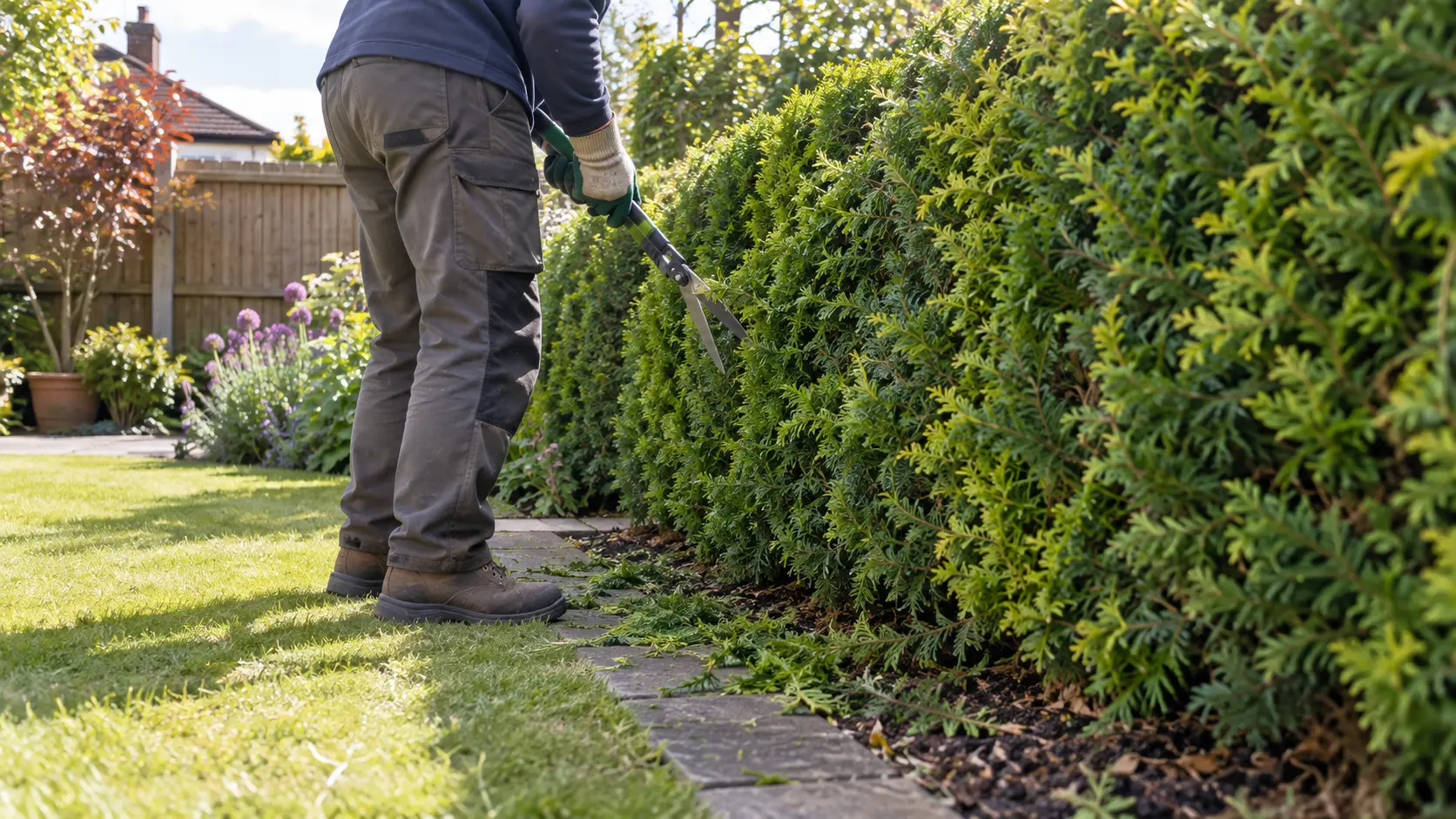


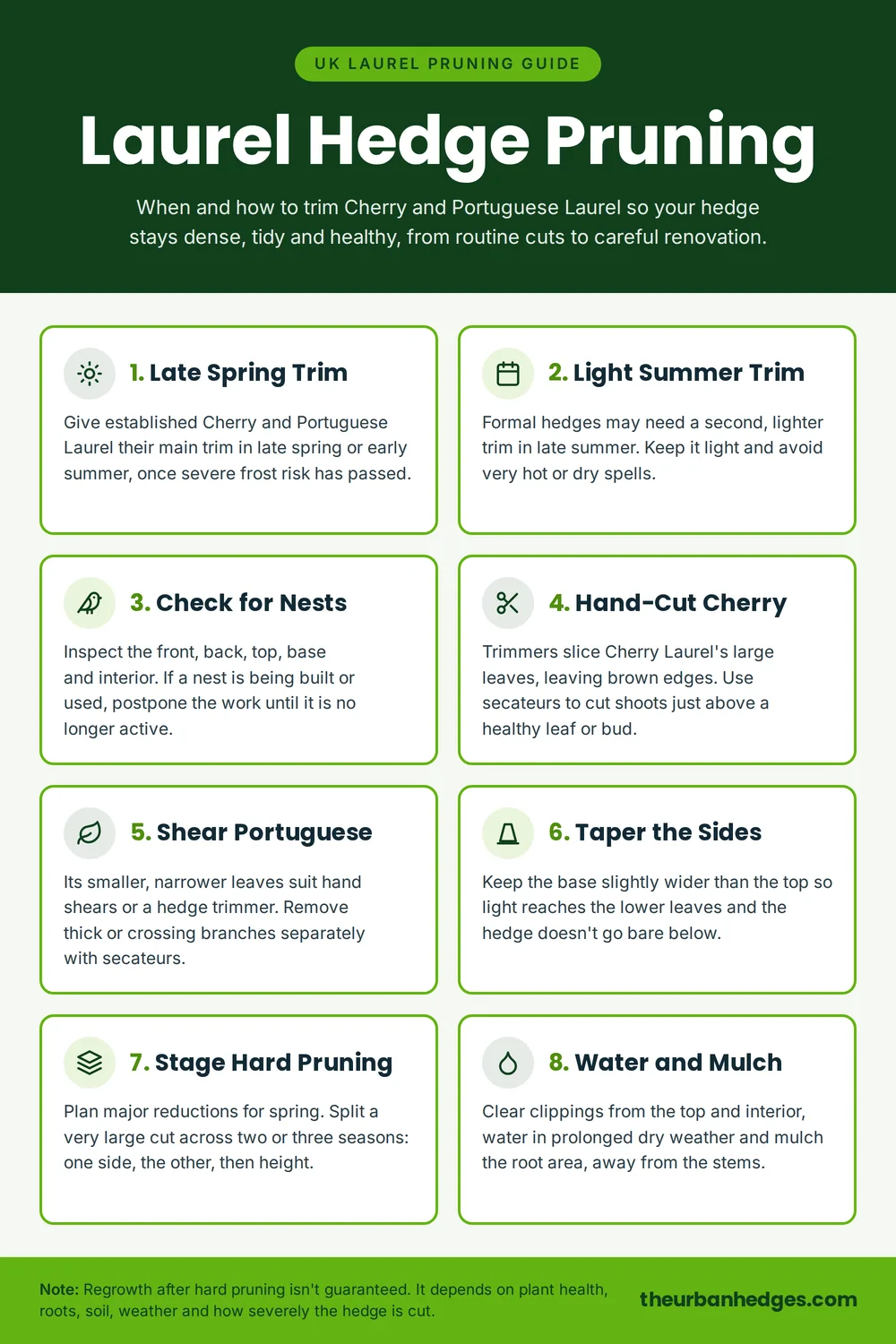
The main trim for an established Cherry or Portuguese Laurel hedge is normally carried out in late spring or early summer, once the risk of severe frost has passed. A light second trim can be completed in late summer if required. Hard pruning or major renovation is generally best planned for spring.
Always inspect the hedge carefully for active bird nests before starting. If a nest is being built or used, postpone the work until it is no longer active.
Regular pruning keeps a Laurel hedge dense, controlled and attractive, but the right method depends on the variety, age and condition of the hedge. Routine trimming of young growth is very different from cutting back an overgrown hedge, and Cherry Laurel’s large leaves require a different approach from the smaller foliage of Portuguese Laurel.
For gardeners asking when to prune Laurel in the UK, late spring or early summer is normally the best time for the main trim of an established hedge. The plant is entering active growth, the risk of severe frost has usually passed and healthy Laurel can cover pruning cuts with fresh foliage.
Pruning during active growth helps a healthy Laurel produce new shoots over the cuts. A formal hedge may be given a second, lighter trim in late summer to remove long growth and restore its outline. Avoid a major reduction at this point because vigorous new growth produced too close to colder weather may be more vulnerable.
| Pruning task | Recommended period | Main consideration |
|---|---|---|
| Routine annual trim | Late spring or early summer | Wait until severe frost risk has passed and check for active nests |
| Optional second trim | Late summer | Keep the cut light and avoid very hot or dry conditions |
| Hard renovation | Spring | Complete after severe frost risk and only when the hedge is healthy |
| Dead or dangerous branches | When necessary in suitable weather | Make clean cuts and avoid unnecessary damage |
| Hedge containing an active nest | Postpone the work | Do not damage, destroy or move an occupied nest |
Winter is not normally the best time for routine Laurel hedge trimming. Waiting until the risk of severe frost has passed reduces the likelihood of frost damage to fresh cuts and exposed foliage. The plant will also be better placed to cover the cuts once it begins growing actively.
Very hot or dry conditions should be avoided too. Removing substantial foliage during drought can place additional stress on the plant. If the hedge is already wilted, recently planted or showing signs of poor health, identify the underlying problem before pruning heavily.
There is an important difference between the horticultural pruning window and the bird nesting season. Late spring and summer can be suitable for the plant, but they are also periods when nesting activity is likely. The RSPB recommends avoiding hedge cutting between March and September where possible and checking for nests at any time of year. If pruning cannot reasonably be postponed, inspect the hedge thoroughly and do not proceed if an active nest is present.
For broader seasonal and legal guidance, read our guide to when you can cut hedges in the UK.
Cherry Laurel and Portuguese Laurel are both evergreen hedging plants, but differences in their leaves and growth affect how they should be pruned.
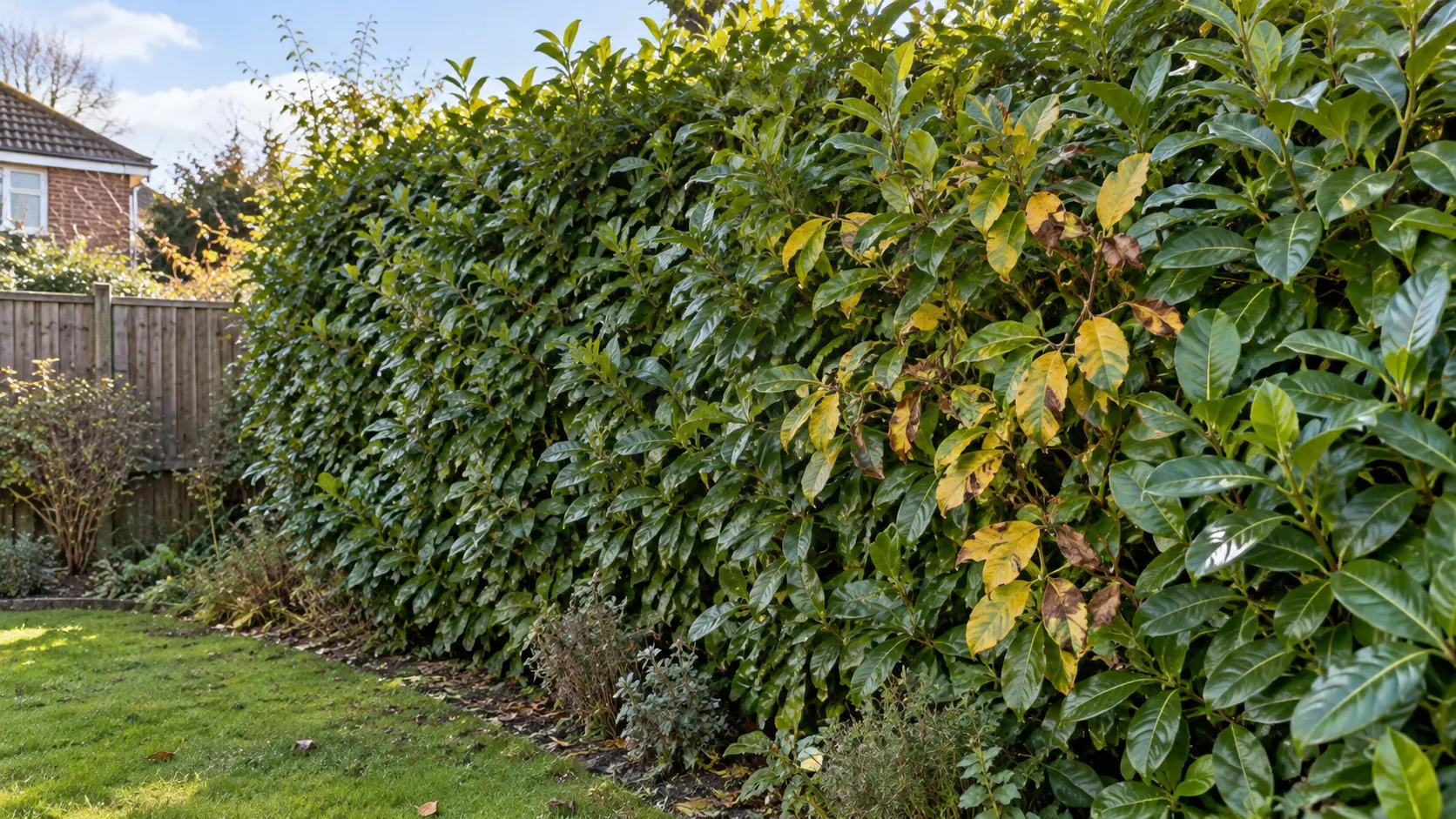
Cherry Laurel, Prunus laurocerasus, has broad, glossy evergreen leaves. A powered hedge trimmer can cut a long hedge quickly, but its blades will slice through many of these large leaves. The damaged edges often turn brown and remain visible until the plant produces new foliage.
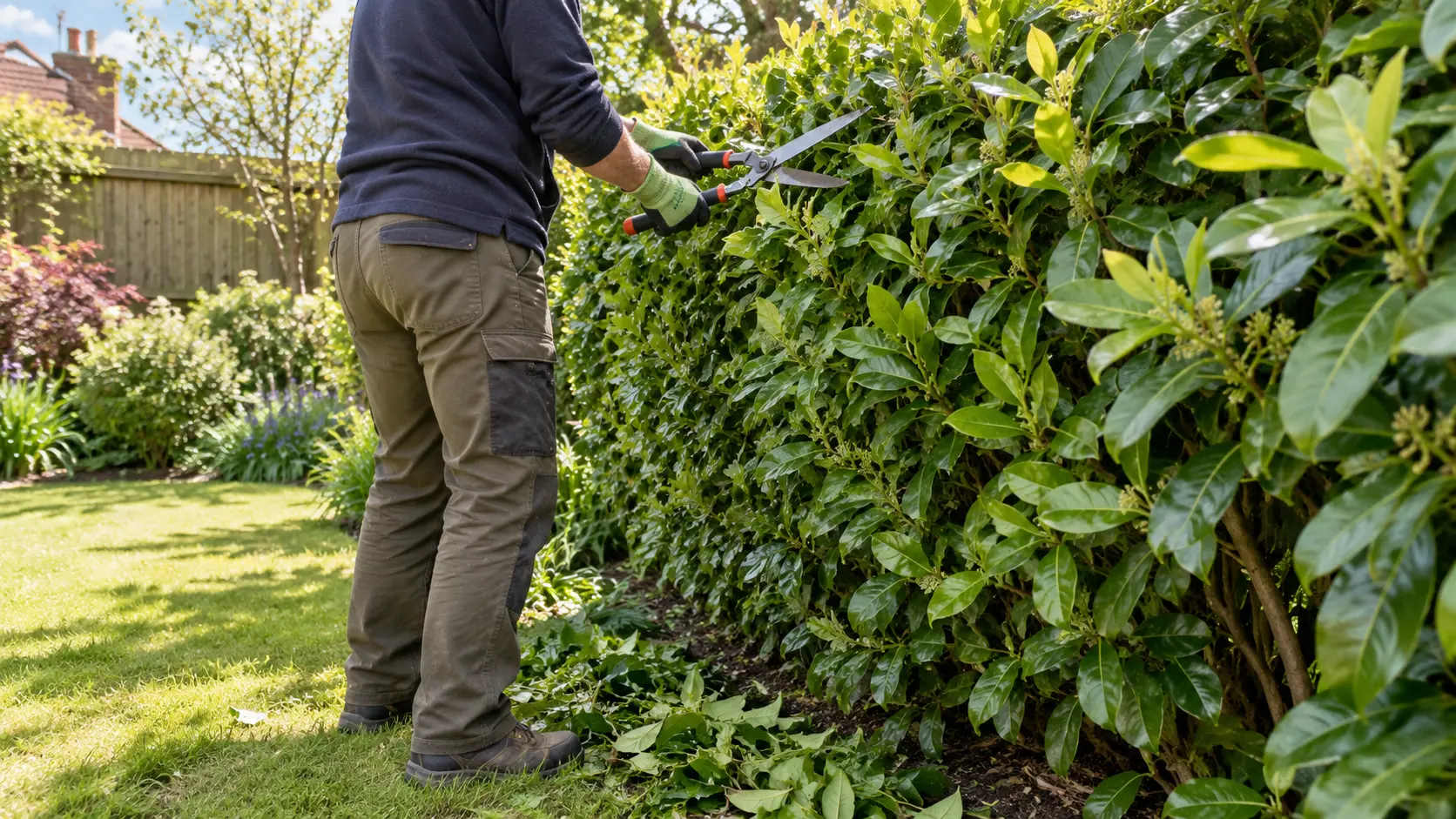
For the neatest finish, use sharp secateurs to cut individual shoots just above a healthy leaf or outward-facing bud. Loppers are more appropriate for thicker branches. Working selectively allows you to cut between the leaves rather than through them.
The Royal Horticultural Society’s hedge-trimming guidance also recommends secateurs or loppers for large-leaved evergreen hedges where time permits.
Using hand tools will take longer, so a hedge trimmer may still be practical for a long or informal Cherry Laurel hedge. If you use one, finish by removing badly damaged leaves and untidy projecting shoots with secateurs.
Customers choosing plants for an evergreen boundary can compare the currently available Cherry Laurel hedging plants.
Portuguese Laurel, Prunus lusitanica, has smaller, narrower leaves and finer young stems. Its foliage is less noticeably damaged by clipping, making hand shears or a powered hedge trimmer more practical for routine shaping.
One main trim may be sufficient for an informal Portuguese Laurel hedge. A formal hedge may need a second light trim in late summer to maintain a precise outline.
Even when using a hedge trimmer, remove thick, crossing, damaged or badly positioned branches separately with secateurs or loppers. This produces cleaner cuts and reduces the risk of tearing or crushing established stems.
Browse the available Portuguese Laurel hedging plants if you are extending or replacing part of an existing hedge.
Sweet Bay, Laurus nobilis, is a different plant from Cherry Laurel and Portuguese Laurel. It is generally less hardy and may require different treatment, particularly after frost damage.



Choose tools according to the thickness of the growth and the finish you want:
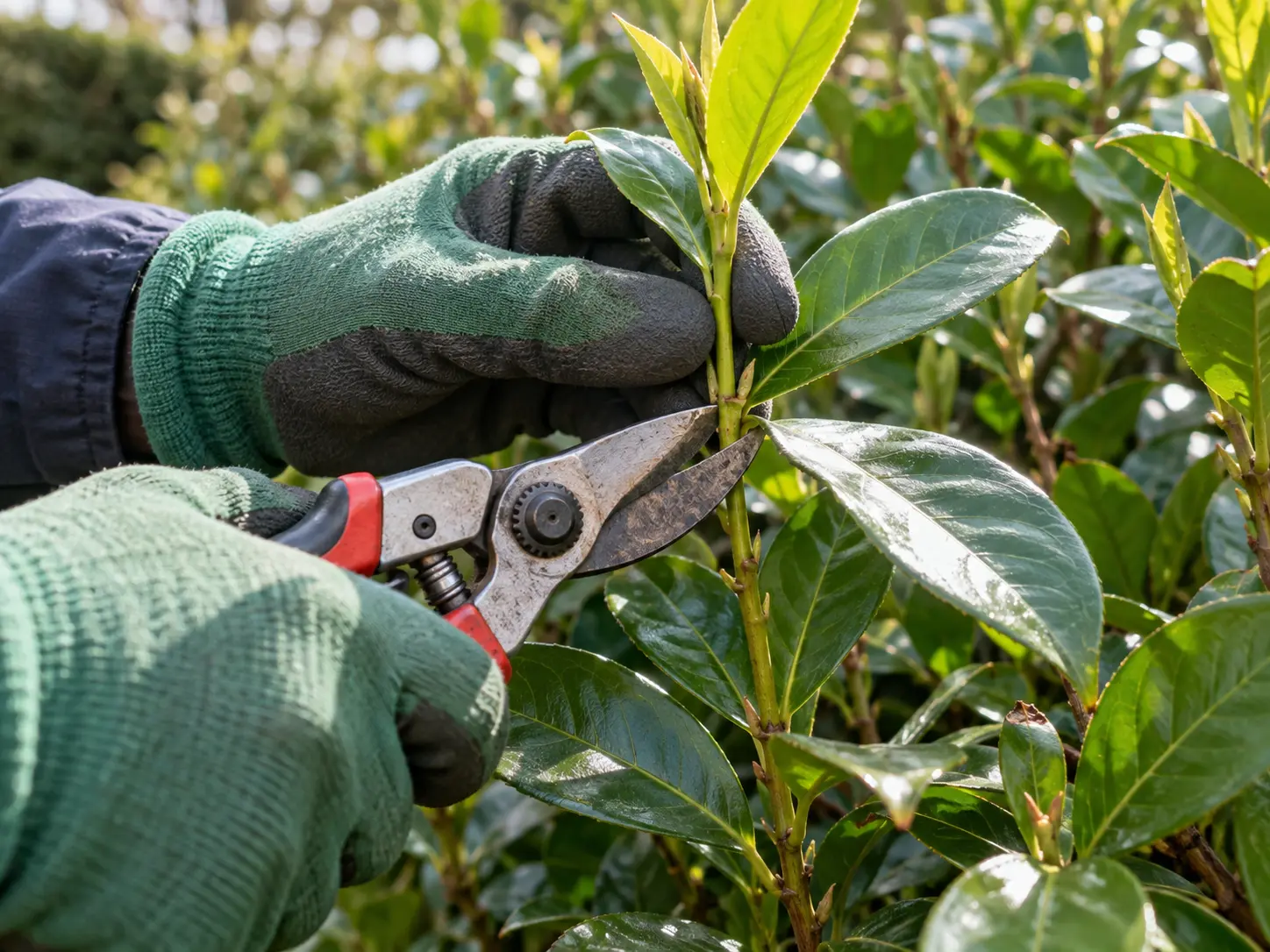
Make sure blades are sharp, clean and suitable for the stems being cut. Blunt tools can crush growth and leave ragged wounds. Clean equipment before use and between hedges, particularly where disease may be present.
Avoid using powered equipment above shoulder height. Do not attempt to prune a tall hedge near overhead cables, roads or other hazards without appropriate equipment and experience.
Whether you are learning how to trim a Laurel hedge for routine maintenance or how to cut a Laurel hedge that has become too large, assess its health and identify the type of pruning required before starting.
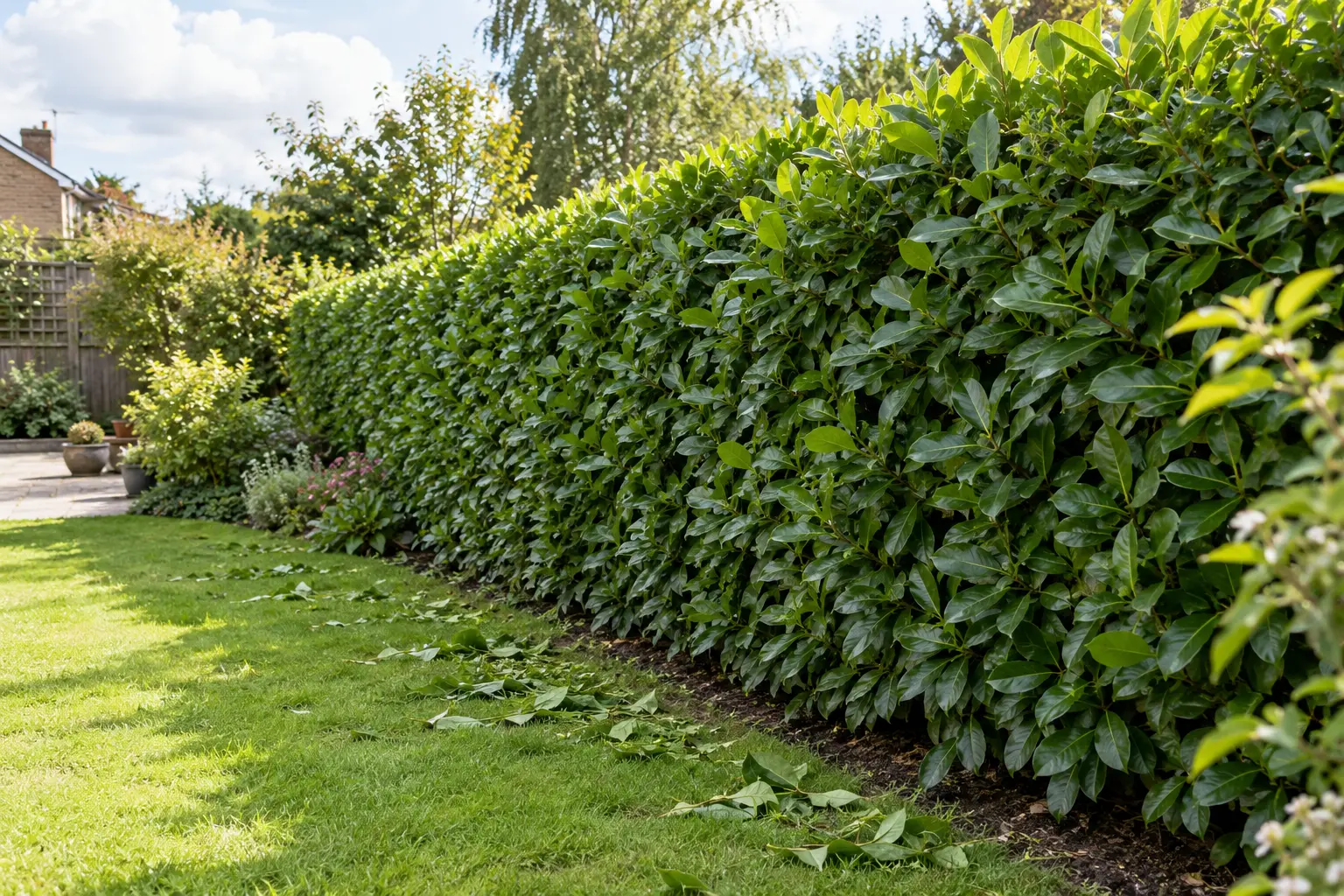
If the hedge requires a major reduction, identify the established branches that must be shortened and cut them cleanly. Repeatedly passing a hedge trimmer over thick growth is not an effective substitute for renovation pruning.
Young Laurel hedges benefit from light formative pruning that encourages branching without stopping them from gaining height.
Remove dead or damaged shoots and lightly shorten long side growth to encourage a dense base. Allow the principal upright shoots to continue growing until the hedge is close to its intended height. Only then should regular maintenance pruning of the top begin.
Cutting the leading shoots too early can slow height development. However, leaving all the side growth untouched may produce a tall hedge with a thin or open base. Lightly trimming straggly side shoots creates a better balance.
Do not severely prune a newly planted Laurel simply because it has made limited visible growth. Large pot-grown or root-ball plants may initially direct energy towards root establishment before producing stronger shoots.
An established informal Laurel hedge usually needs one main trim each year. A formal hedge may need a second light trim in late summer to maintain a precise shape.
The best time to trim Laurel hedges depends on whether the work is routine maintenance or a substantial reduction. Young hedges require lighter formative pruning, while vigorous plants or hedges growing in a restricted space may need more frequent attention.
The correct frequency depends on the variety, site, weather, plant health and the finish you want. Maintenance pruning should remove relatively young growth and preserve the established framework. If thick woody branches must be removed to reduce the hedge substantially, treat the work as renovation rather than routine trimming.
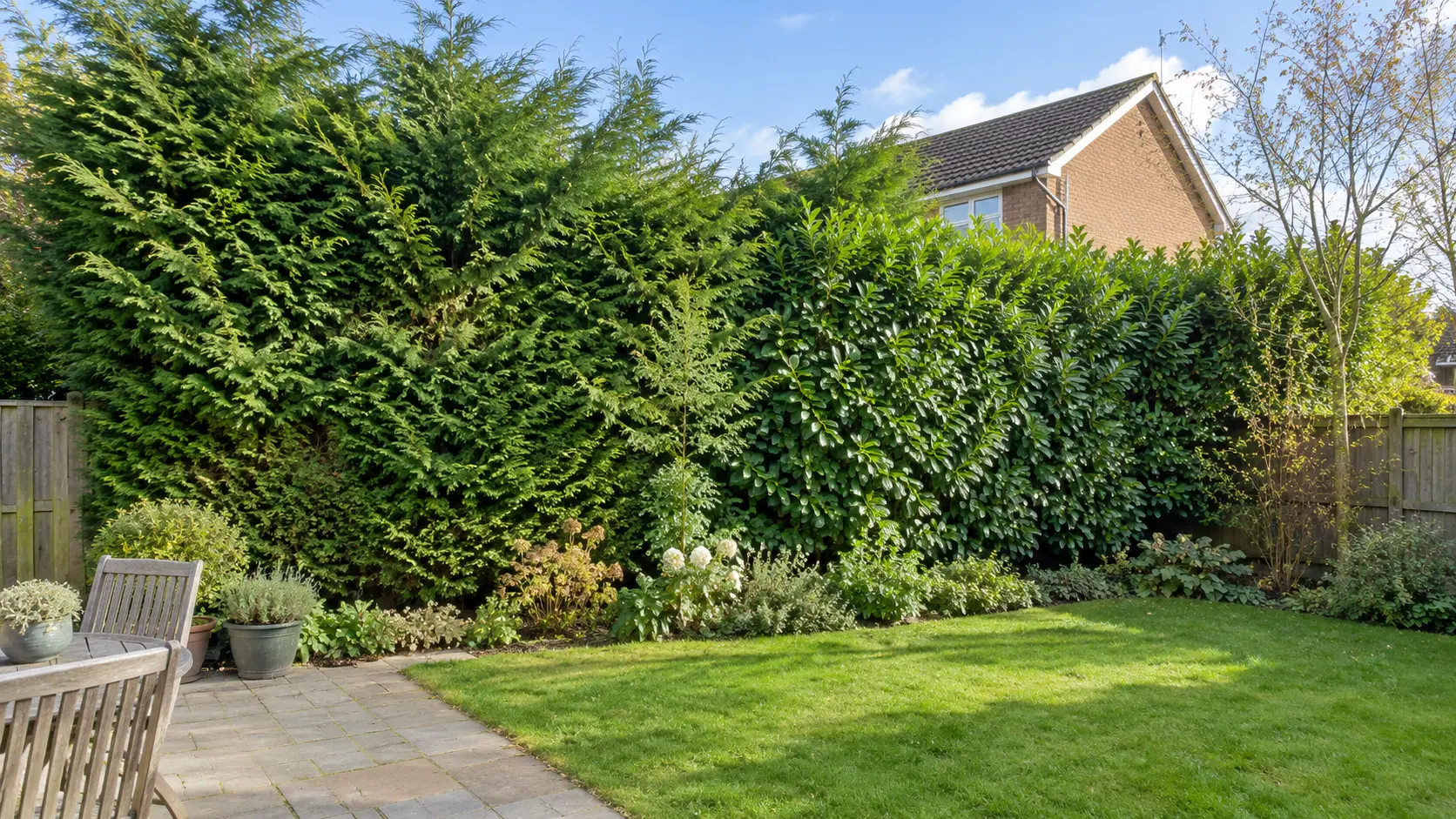
Cutting back a Laurel hedge substantially requires more planning than removing the current season’s growth. Healthy Cherry and Portuguese Laurel can usually produce new shoots from old wood, so an overgrown hedge can often be reduced successfully.
However, regrowth is not guaranteed and depends on the roots, plant health, soil, weather, watering and severity of the cut.
Plan hard pruning for spring after the risk of severe frost has passed. Before starting, check that the hedge is not suffering from drought stress, waterlogging, root damage or a serious health problem.
A very large reduction is often safer when divided across two or three growing seasons:
This staged approach places less stress on the plants and retains more privacy while the hedge recovers.
A healthy and vigorous hedge may tolerate a more substantial one-stage reduction, but staged renovation pruning is the more cautious option where a large proportion of the plant must be removed.
Dense evergreen Laurel provides valuable shelter and can conceal nests deep inside the foliage.
Under the Wildlife and Countryside Act 1981, it is an offence to intentionally damage or destroy a wild bird’s nest while it is being built or used. The main nesting period is commonly associated with spring and summer, but birds can nest outside these dates.
Before pruning:
The RSPB advises postponing the work until the nest is no longer in use. Its nesting-bird guidance also recommends using manual tools where cutting is necessary because they are easier to control.
For a complete seasonal calendar and an explanation of the rules affecting domestic and agricultural hedges, read when you can cut hedges in the UK.
Cold weather can cause frost damage to newly exposed foliage and cut stems. Delay routine trimming until the risk of severe frost has passed.
Removing a large amount of foliage increases stress when the plant is already struggling for water. Wait for better conditions and address watering problems first.
Blunt blades crush stems and create untidy cuts. Dirty equipment can transfer plant material and potential disease between hedges.
A hedge trimmer is fast, but sliced leaves can develop obvious brown edges. Use secateurs for the best finish or tidy the most visible damage afterwards.
A top-heavy hedge shades the lower foliage and can develop a bare base. Maintain a tapered hedge shape, with the bottom slightly wider than the top.
Allow the main upright shoots to approach the intended height before trimming the top regularly. Concentrate early pruning on damaged growth and lightly shortening untidy side shoots.
A stressed hedge may recover slowly or unevenly. Correct drought, waterlogging or other underlying problems before attempting a major reduction.
A quick glance at the outside is not sufficient. Active nests can be hidden deep within dense Laurel foliage.
Heavy accumulations can restrict light and airflow. Remove cut material from the top, interior and base.
Powered trimmers are intended mainly for younger outer growth. Use loppers or a pruning saw to make clean cuts through established branches.
Remove all substantial clippings after pruning and inspect the finished hedge for torn or damaged branches.
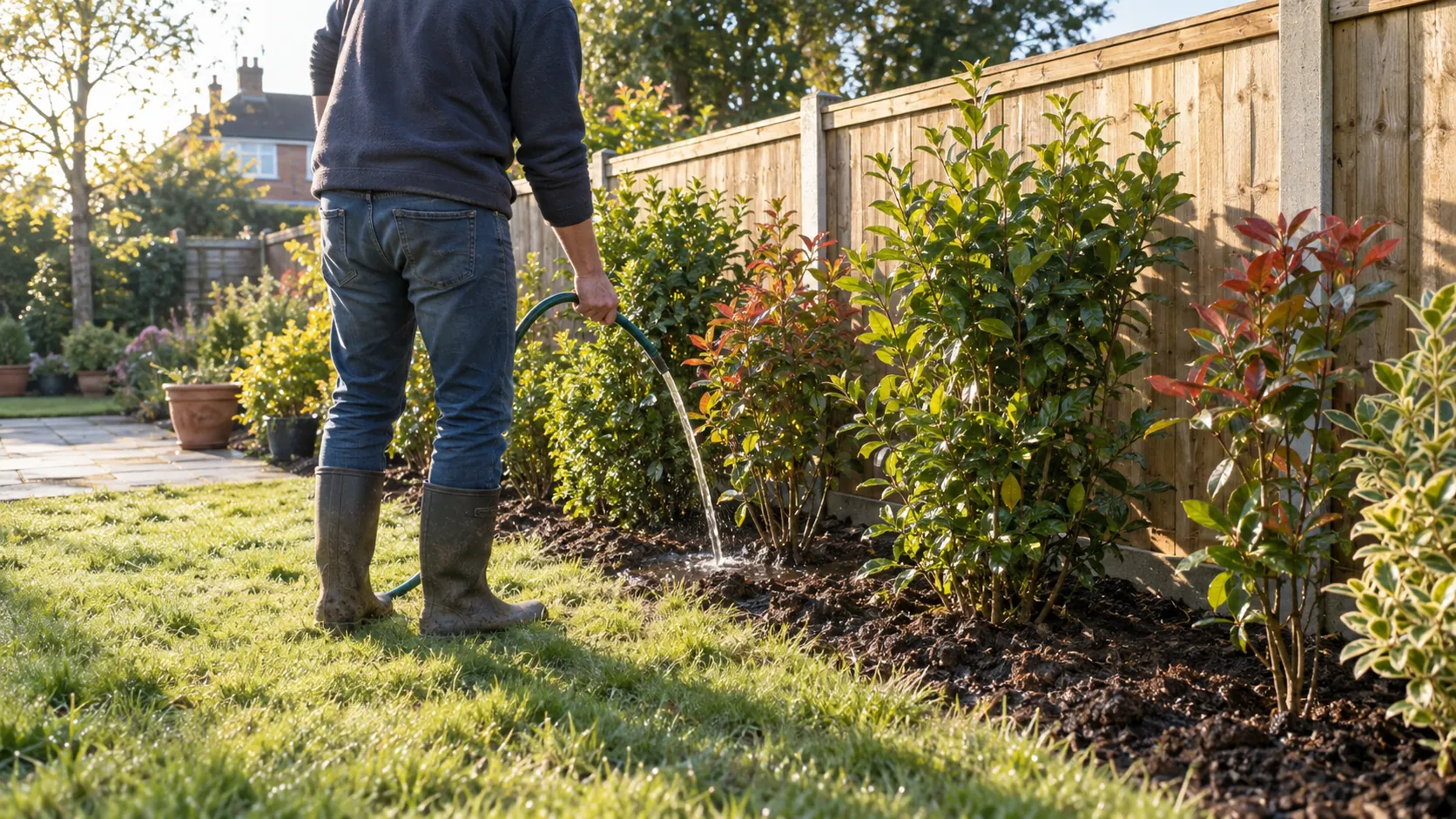
Water during prolonged dry weather, particularly after renovation pruning. Apply an organic mulch around the root area where appropriate, keeping it away from direct contact with the stems.
Monitor the hedge for new shoots and signs of stress. Weak or uneven regrowth may indicate drought, poor drainage, root damage or another underlying problem rather than a need for more fertiliser.
Avoid applying excessive feed to a severely droughted or waterlogged hedge. Correct the moisture or drainage problem first. The RHS recommends mulching established hedges and providing additional watering during drought conditions.
The main trim is normally completed in late spring or early summer, once severe frost risk has passed. A light second trim can be made in late summer if required. Always check for active bird nests before cutting, regardless of the month.
Dead or dangerous branches may be removed when necessary in suitable weather, but winter is not normally the best time for routine Laurel hedge trimming. Frost and cold winds can damage fresh cuts, and the plant will not cover them quickly while it is not actively growing.
One annual trim is sufficient for many informal Laurel hedges. A formal hedge may need a second light trim in late summer. Frequency depends on the variety, growing conditions, available space and the level of formality required.
Healthy Cherry and Portuguese Laurel can usually recover from hard pruning, but the result depends on the condition of the plant and its roots. Complete major renovation in spring and consider spreading a very large reduction across two or three growing seasons.
Established Cherry and Portuguese Laurel can often produce shoots from old wood, but regrowth cannot be guaranteed. Recovery is affected by plant health, soil, drainage, weather, watering and how severely the hedge has been cut.
Yes, particularly on a long hedge where hand pruning would be impractical. However, the trimmer will slice through some of Cherry Laurel’s large leaves and may leave temporary brown edges. Secateurs or loppers provide a cleaner finish.
Portuguese Laurel is normally given its main trim in late spring or early summer. A formal hedge can receive a second light trim in late summer. Its smaller leaves make it better suited to shears or a hedge trimmer than Cherry Laurel.
The best time for routine Laurel hedge pruning is usually late spring or early summer, with an optional light trim later in the season. Use tools suited to the Laurel variety, keep the hedge slightly wider at the base and treat major reductions as carefully planned renovation work.
If you are planting, extending or replacing an evergreen boundary, compare our Cherry Laurel, Portuguese Laurel and wider range of hedging plants.