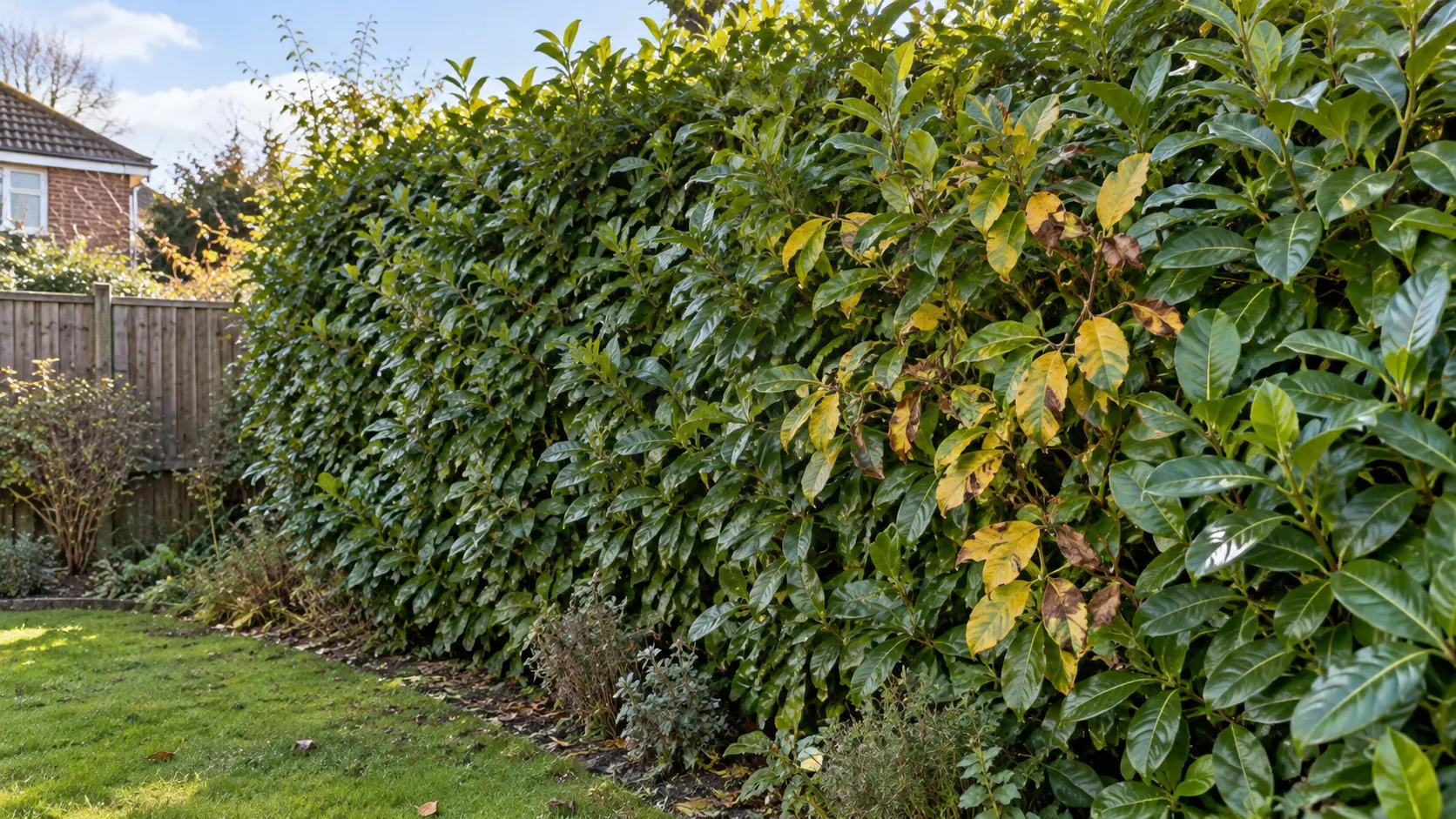


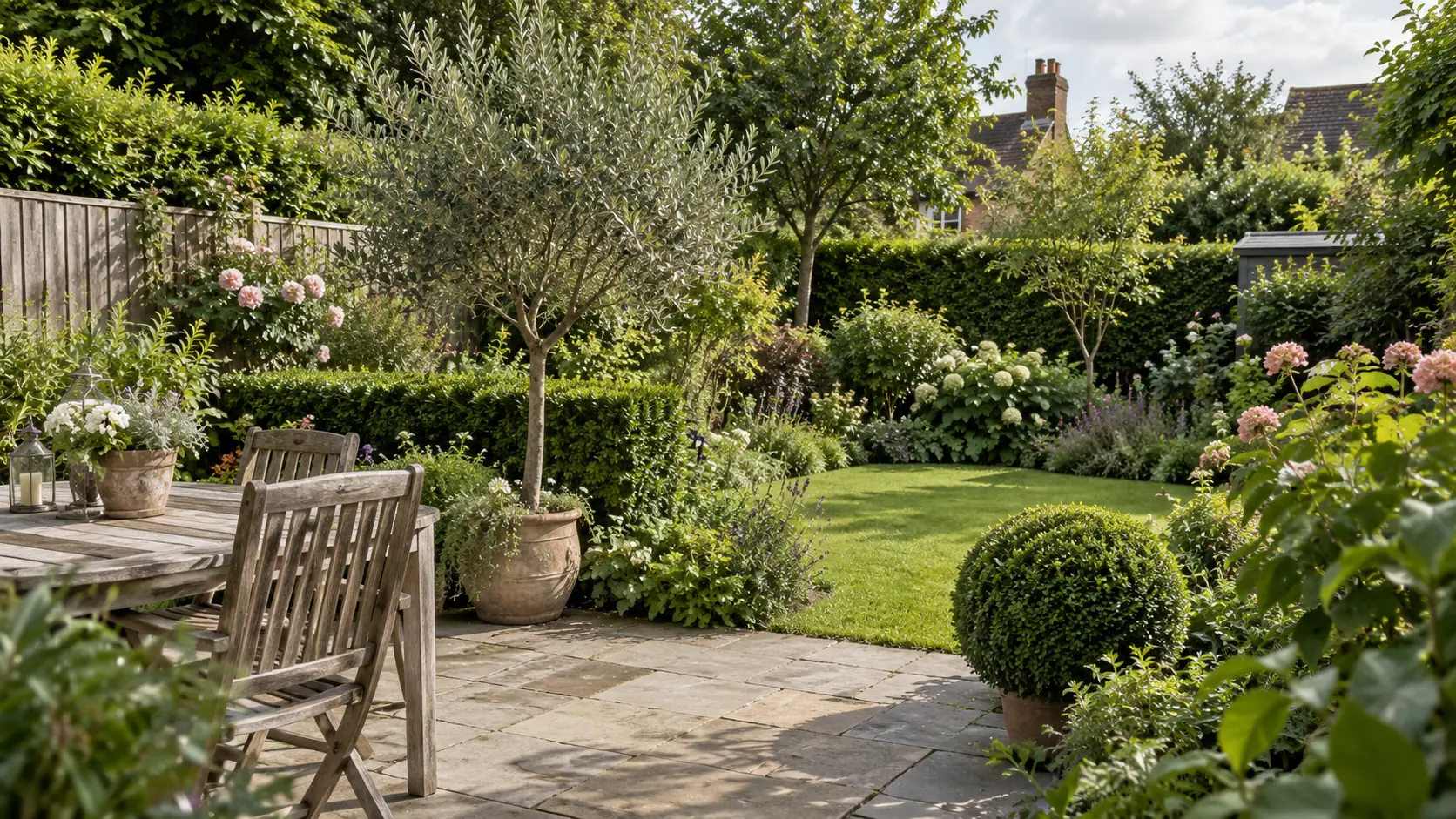
Popular garden styles include formal, contemporary, Mediterranean, cottage, Japanese-inspired, wildlife-friendly and woodland designs. The right style depends on your property, available space, local conditions and how much maintenance you want to undertake. Choose plants that create the desired look while also suiting your garden’s light, soil type, drainage and exposure.
A garden style gives the space a sense of direction. It influences the shapes, materials, colours and plants you choose, but it does not have to become a strict set of rules.
Gardening styles range from highly structured formal planting to relaxed, naturalistic planting. There are many styles of garden to explore, and most real gardens borrow ideas from more than one.
A suburban garden might combine contemporary paving with Mediterranean planting, while a traditional home could have clipped formal hedging around much looser flower borders. The important thing is to choose ideas that work together and, just as importantly, work in your garden.
The main garden design styles found in the UK include formal, traditional, contemporary, Mediterranean, cottage, Japanese-inspired, wildlife-friendly, courtyard and woodland gardens.
Each creates a different atmosphere and requires a different balance of structure, seasonal planting and maintenance.
| Garden style | Defining features | Suitable plants | Best suited to | Maintenance |
|---|---|---|---|---|
| Formal and traditional | Symmetry, straight lines, clipped shapes and repeated planting | Yew, Laurel and topiary | Period properties, entrances and structured layouts | Medium to high |
| Contemporary and modern | Clean lines, limited planting palettes and architectural forms | Olive trees, Photinia, topiary and structured evergreens | Modern homes, patios and redesigned suburban gardens | Low to medium |
| Mediterranean | Gravel, terracotta, silver foliage and sun-loving plants | Olive trees and architectural evergreens | Sunny, sheltered and free-draining gardens | Medium |
| Cottage and informal | Layered planting, flowers, softened edges and seasonal colour | Camellia, flowering shrubs and informal hedging | Traditional homes and plant-rich borders | Medium to high |
| Japanese-inspired | Restraint, asymmetry, stone, negative space and carefully placed plants | Shaped evergreens, conifers and specimen plants | Courtyards, quiet spaces and smaller gardens | Medium |
| Wildlife-friendly | Layered planting, shelter and overlapping flowering seasons | Mixed shrubs and hedging plants | Gardens prioritising habitat and biodiversity | Low to medium |
| Courtyard and urban | Containers, vertical structure and carefully chosen focal plants | Trained olive trees, compact topiary and shrubs | Small gardens, patios and enclosed spaces | Medium |
| Woodland and shade | Layered foliage, natural shapes and shade-tolerant plants | Camellia and suitable evergreen shrubs | Sheltered, partially shaded gardens | Low to medium |
These garden types can be adapted rather than copied exactly. Some styles of gardens are easier to recreate in the UK than others, but the property, garden layout and growing conditions should always guide the final design.
Choose a garden style by looking at the site before deciding how you want it to look. The strongest garden style ideas work with the space rather than fighting against it.
Start with a few practical questions:
The architecture of the house matters too. Formal planting can complement an older symmetrical property, while clean lines and sculptural plants often sit comfortably beside a contemporary extension. This is guidance rather than a rule. Contrast can work well when the materials and planting still feel connected.
Your style of gardening should also influence the decision. Some people enjoy clipping topiary and making regular seasonal adjustments. Others want evergreen structure with fewer interventions. Different styles of gardening place very different demands on the owner, even when the finished gardens look equally relaxed.
A formal garden style is built around order. Straight paths, repeated plants, balanced beds and clearly defined focal points give the space a calm, deliberate appearance.
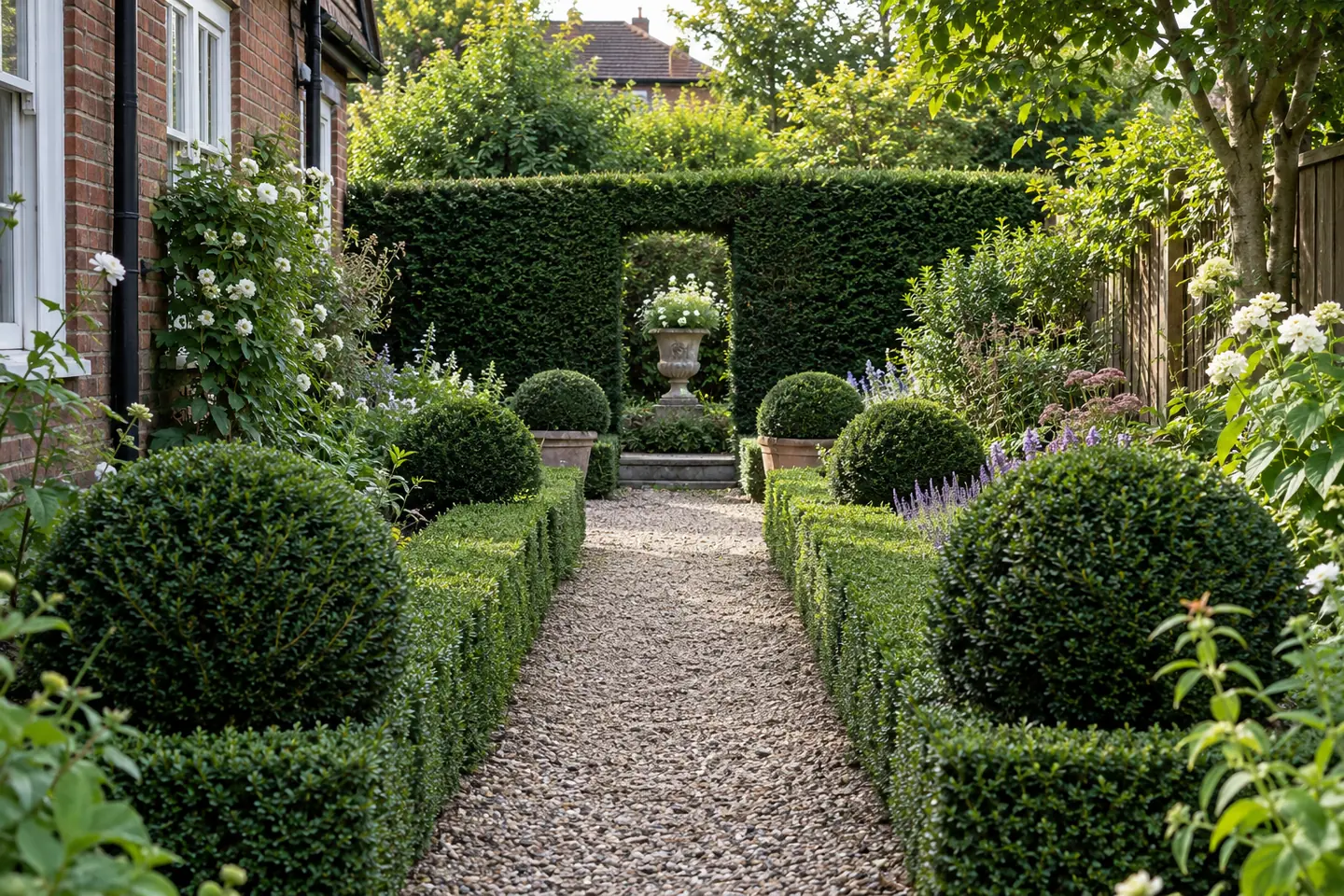
Clipped hedges often provide the framework. Yew is particularly well suited to dense, controlled shapes, while Cherry Laurel and Portuguese Laurel can create substantial evergreen structure where their mature size suits the space. A pair of matching specimens can emphasise an entrance, path or seating area.
The topiary plants used in formal gardens might include spirals, lollipop forms or other clearly defined shapes. Repetition usually matters more than the number of varieties. Using the same shape or plant at intervals creates rhythm without making the design feel crowded.
Traditional gardens do not have to be rigid. Flowering shrubs, grasses or perennials can spill slightly over the edges of paths and soften the geometry. This creates a more relaxed English garden style while retaining a clear underlying structure.
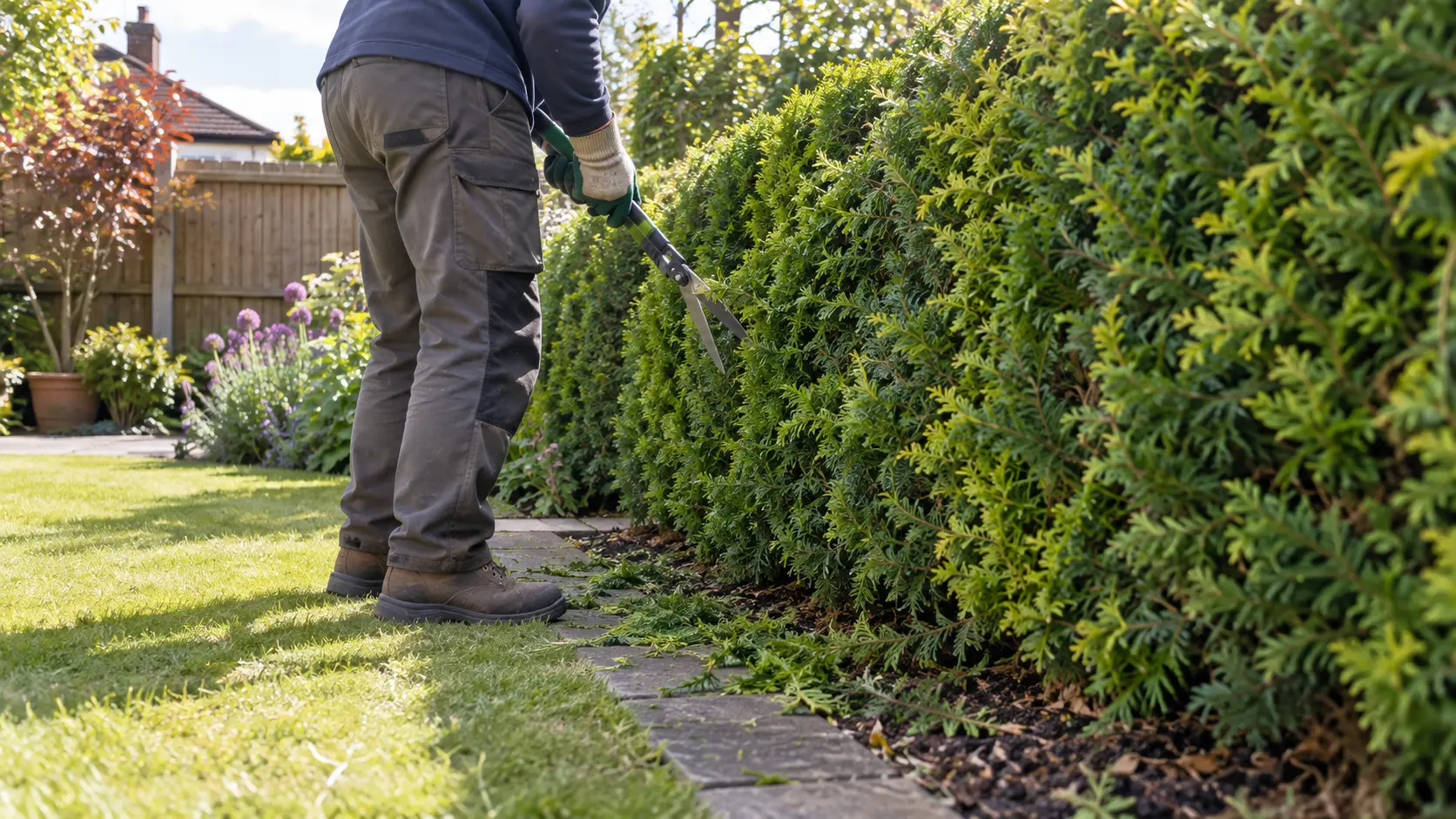
The trade-off is maintenance. Clipped forms, neat boundaries and symmetrical planting expose uneven growth quickly, so regular trimming is part of maintaining the look.
Contemporary and modern garden styles overlap, but they are not always identical. Modernist design is often associated with stronger geometry and a limited palette, while contemporary gardens reflect current tastes and may feel warmer, softer and more flexible.
A contemporary garden style often uses fewer plant varieties, repeated shapes and contrasting foliage. A modern garden style may take this further with more open space, simpler lines and a deliberately limited colour palette.
Both benefit from strong forms and controlled repetition. Instead of filling every gap, allow a few architectural plants enough room to stand out.
A trained olive tree can form a focal point against simple paving or rendered walls. Photinia Red Robin can introduce red young foliage without relying on flowers, while shaped evergreens provide structure throughout the year. Carefully positioned evergreen hedging plants can screen boundaries and simplify the background.
Where privacy is an important part of the design, compare fast-growing evergreen trees and hedges by growth rate, foliage and maintenance.
Contemporary planting does not need to mean a row of identical plants. Contrasting foliage textures often create more interest than using many colours. A sculptural specimen, an evergreen backdrop and a softer lower layer may be enough to make the garden feel considered.
Before buying, check mature height and spread. A plant that looks perfectly proportioned beside a new patio may overwhelm it once established if the space has not been planned properly.
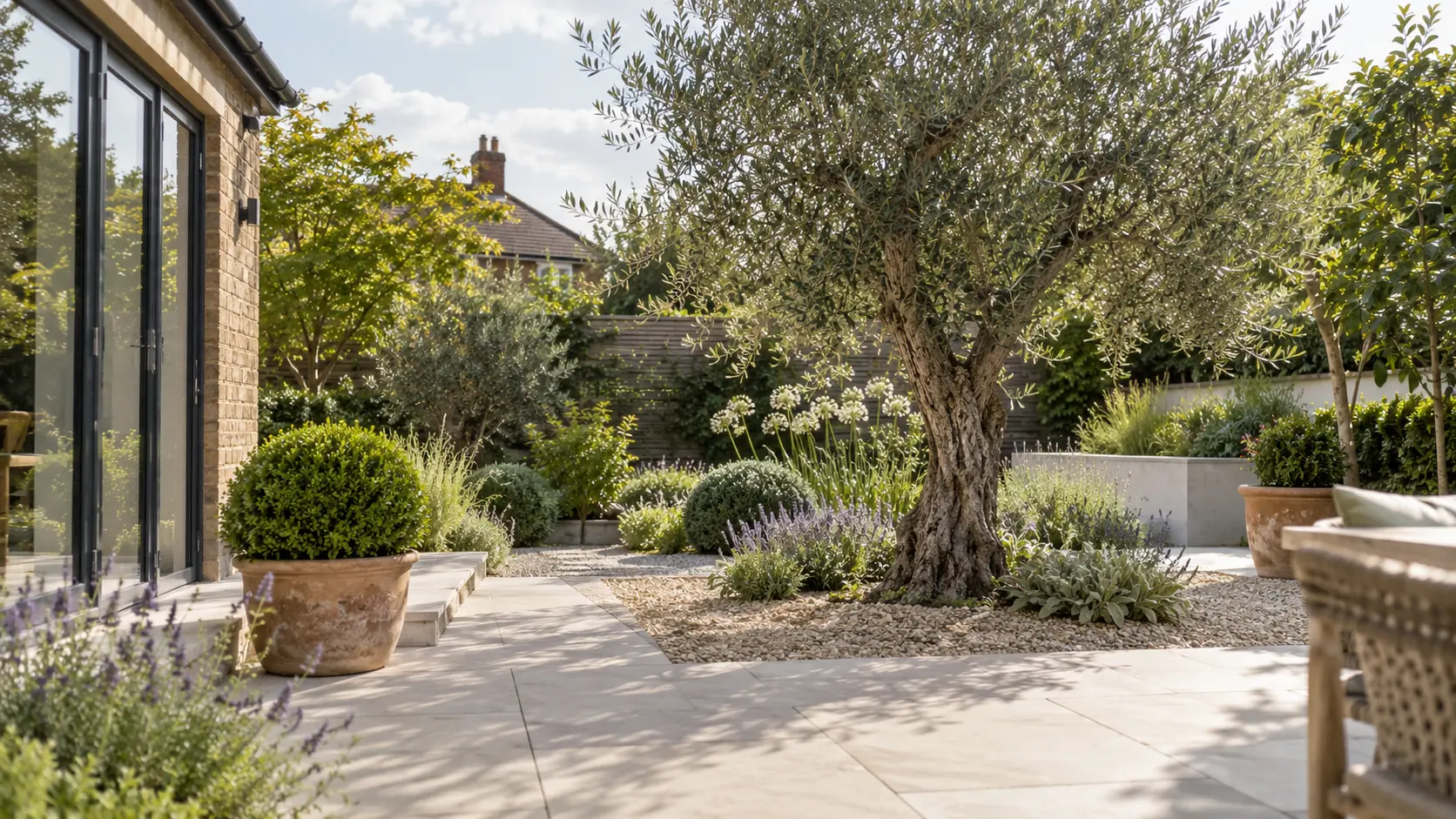
A Mediterranean garden style works best in a sunny, sheltered position with free-draining soil. Gravel, terracotta pots, warm-toned paving and silver-green foliage can create the character without trying to reproduce a southern European climate exactly.
Olive trees are a natural focal point for Mediterranean-style gardens in the UK. Their evergreen foliage and distinctive form work particularly well beside gravel, stone and simple containers.
Drainage is crucial. British winter wet can be more challenging than summer temperatures, especially in heavy soil. Where the ground is unsuitable, a generously sized container gives more control over the growing medium and allows the plant to be positioned in a brighter, more sheltered part of the garden.
Potted olive trees may need additional protection during periods of severe frost, particularly in exposed positions. Containers should not be left where the compost remains saturated throughout winter.
Avoid filling the space with unrelated Mediterranean accessories. A limited material palette normally produces a more convincing result: one type of gravel, a small number of terracotta containers and repeated foliage shapes will feel calmer than many competing features.
Mediterranean-style gardens in UK properties can be either formal or informal. Matching olive trees beside a path create symmetry, while a single naturally shaped specimen surrounded by gravel gives a looser appearance.
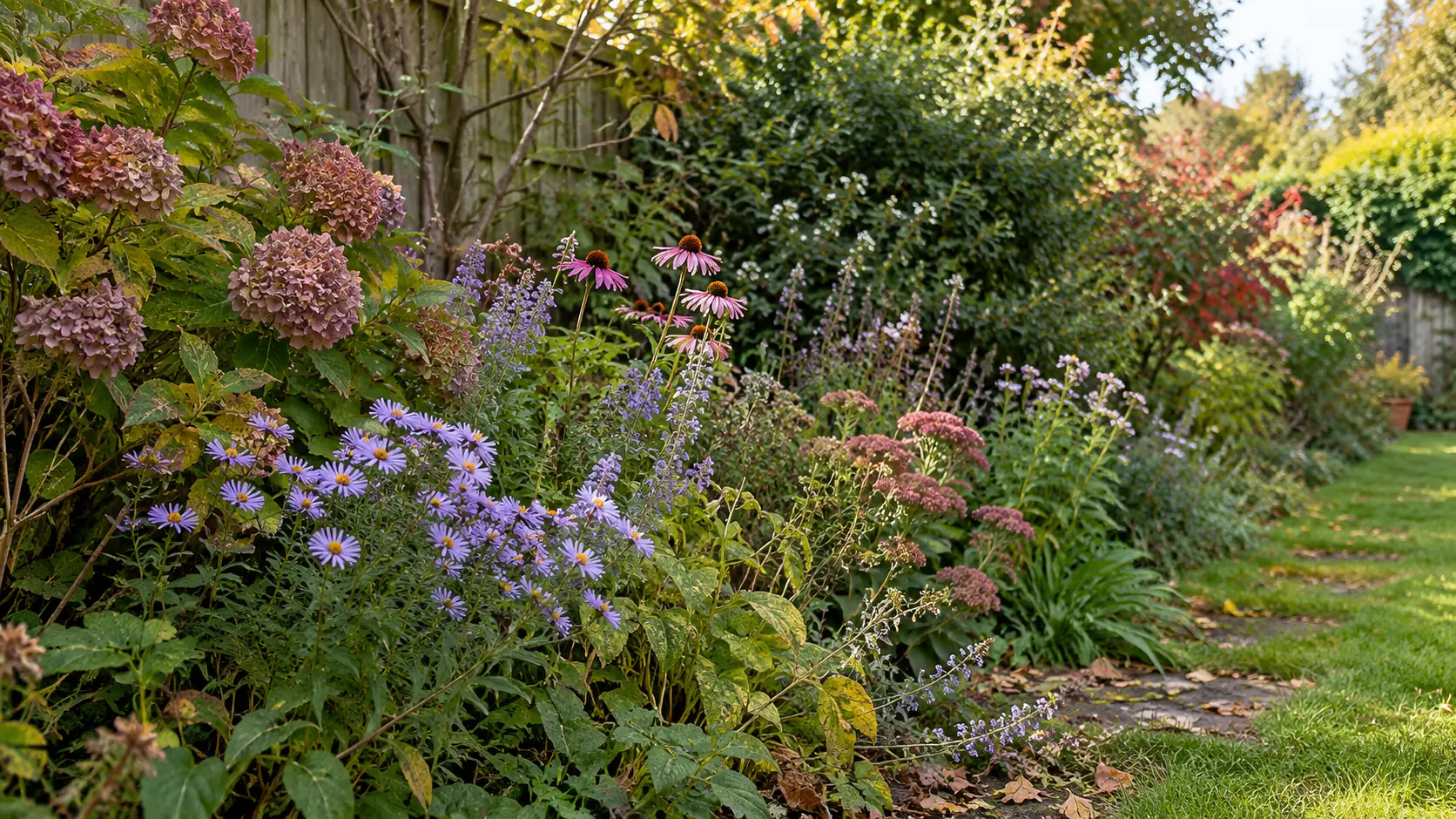
A cottage garden style feels abundant, colourful and relaxed. Paths are often softened by planting, borders contain a mixture of heights and flowers appear in layers rather than isolated blocks.
Despite the apparently casual result, good cottage gardens still need structure. Evergreen and flowering shrubs for UK gardens can provide a dependable background when perennials die back. An informal hedge can define the boundary without looking as severe as a closely clipped geometric screen.
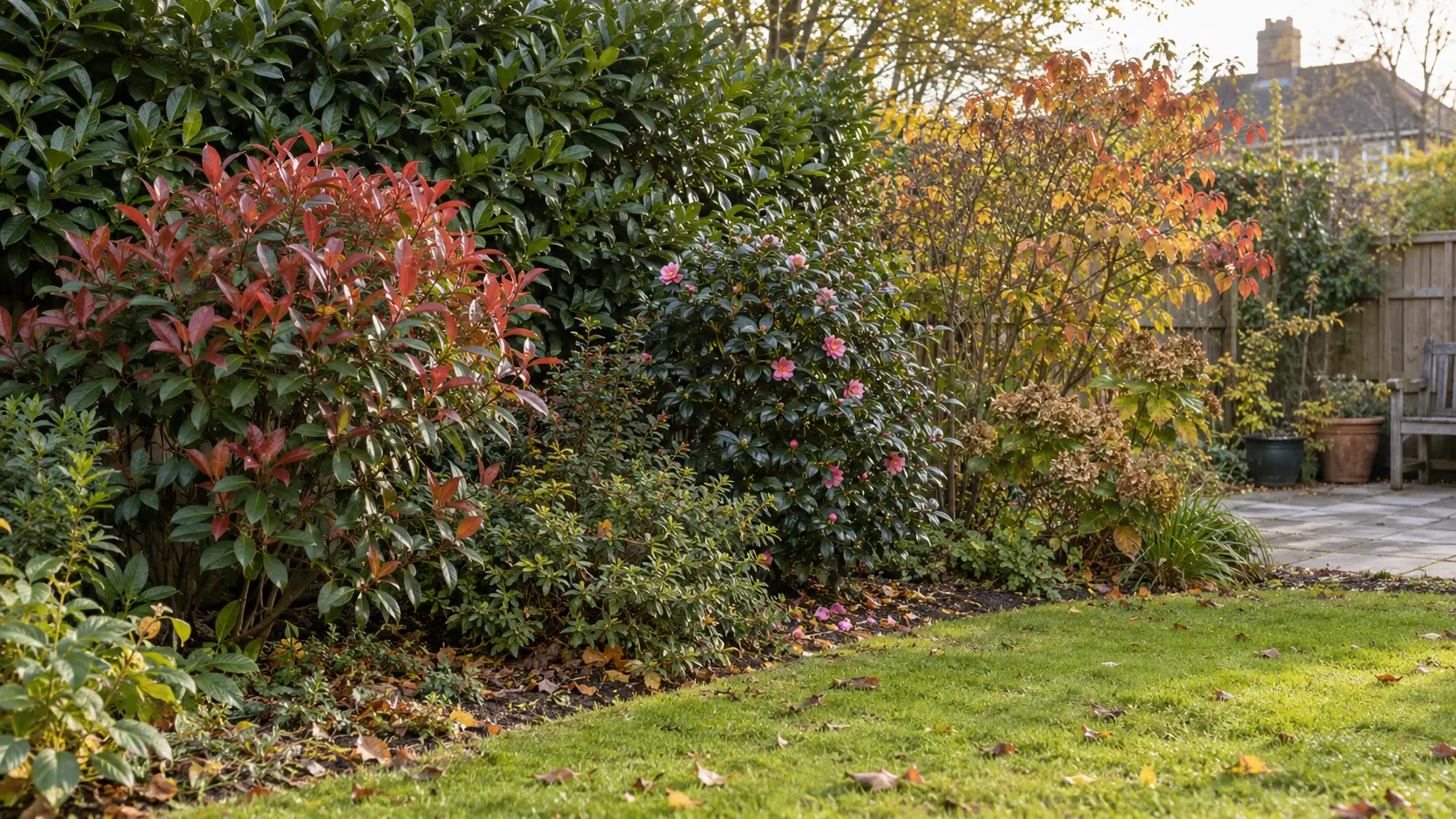
Camellia sasanqua can contribute evergreen foliage and seasonal flowers where the soil and position are suitable. Photinia Red Robin can add contrasting young growth, while Laurel provides a darker background behind more colourful planting.
A cottage-style garden is not necessarily low maintenance. Dense borders may require staking, cutting back, dividing and replacing. If you prefer the look but have limited time, use fewer plant varieties and repeat them through the border. This keeps some of the softness without creating a complicated maintenance schedule.
Our guide to the different types of shrubs and bushes explains the differences between evergreen, flowering, foliage and screening plants.
Japanese garden styles are based on long-established design traditions, so it is better to take inspiration from their principles than to combine decorative features without context.
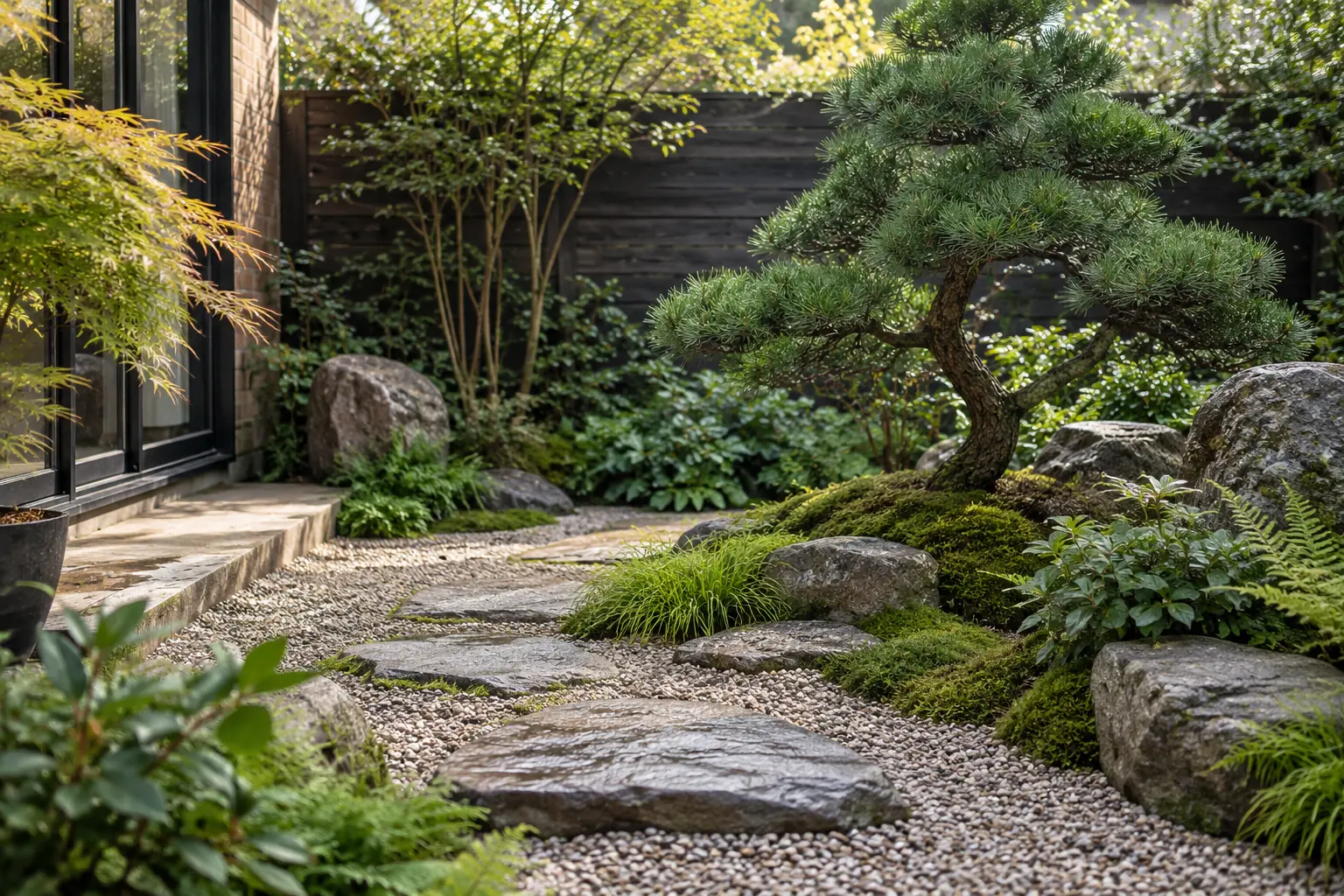
A Japanese garden style usually relies on restraint, balance, asymmetry and carefully controlled views. Stone, gravel, water and plants are positioned to create calm, with open space treated as part of the design rather than an area waiting to be filled.
When choosing plants for a Japanese-style garden in the UK, focus on form and placement. A carefully positioned specimen has more impact than several competing focal points.
Shaped evergreen plants, Yew and selected Thuja can contribute year-round foliage and controlled structure. Other conifers for structure and screening may help create enclosure, provided their eventual height and maintenance requirements suit the space.
Cloud-pruned and other trained plants may fit this approach, but one shaped tree does not create an authentic Japanese garden by itself. Its relationship with nearby planting, paths, stone and negative space matters just as much.
Japanese-style gardens in UK settings can suit smaller spaces particularly well because restricted views and carefully placed screening create separation. When developing Japanese-style garden ideas for a UK plot, consider existing boundaries, sightlines and the areas seen from inside the house.
Choose plants for the site rather than appearance alone. Aspect, soil type, moisture and exposure still determine whether the planting will remain healthy.
A wildlife-friendly garden should provide a mixture of food, shelter and connected planting rather than focusing on one decorative feature.
Layered shrubs can give birds and other wildlife places to shelter. Flowers with overlapping seasons can provide nectar for pollinators, while less rigid boundaries allow naturalistic planting to spread through the garden. Hedges can be especially useful where they create a continuous planted route between neighbouring spaces.
Not every evergreen or ornamental plant is native, and no individual product automatically creates a wildlife garden. Look at the garden as a whole and combine suitable plants with water, flowering periods, nesting opportunities and reduced chemical use.
A prairie-style garden is another naturalistic option. It normally uses grasses and flowering perennials in repeated drifts to create movement. The Urban Hedges range does not provide a complete prairie planting scheme, but evergreen shrubs or hedging can form a useful structural background.
Leylandii can provide substantial evergreen screening, but its vigorous growth means its final position and ongoing maintenance should be planned carefully. Thuja offers another evergreen option with a different growth habit and foliage texture. Neither should be chosen solely because fast or dense coverage is wanted; the available width and maintained height also matter.
Where hedges are maintained, check for active nests before beginning work. Our guide explains when you can cut hedges in the UK and the seasonal and wildlife considerations involved.
The best style for a small UK garden is one that uses a limited number of well-proportioned plants and gives each one a clear purpose.
Containers make it easier to control positioning and bring planting onto paved surfaces. Trained olive trees, compact topiary and selected evergreen shrubs can provide height without filling every part of the garden at ground level.
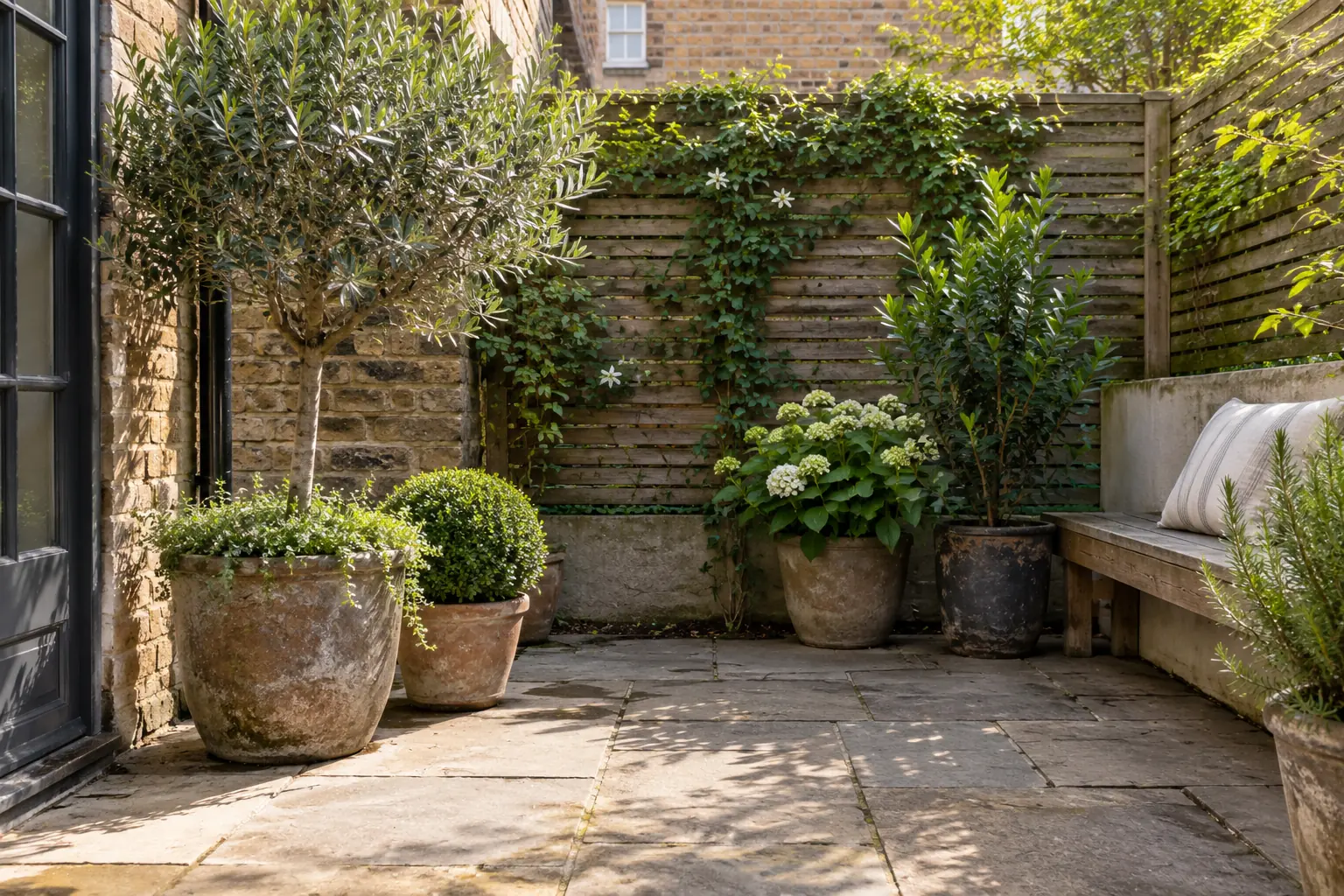
Vertical emphasis can also make the space feel larger. A clear-stemmed plant draws the eye upwards, while a narrow screen can soften a boundary without using the full depth of a large shrub.
Be realistic about mature size. A large Laurel or vigorous conifer may provide quick privacy but could demand frequent maintenance in a restricted courtyard. Choose the maintained height first, then find a plant capable of delivering it in the available space.
Use fewer materials and repeat them. Matching pots, one paving finish and a controlled colour palette usually make a small garden feel more cohesive.
A woodland-style garden depends on layered foliage, natural shapes and plants that suit lower light levels. It can work in a sheltered plot beneath established trees or along a boundary that receives partial shade.
Evergreen shrubs help retain structure in winter, while flowering shrubs introduce seasonal interest. Camellia sasanqua may suit a sheltered position with appropriate soil conditions, but it should not be treated as suitable for every shaded location.
Our guide to the best evergreen shrubs for shade compares suitable options in more detail.
Tropical-style gardens can work in the UK when the design uses hardy plants with bold foliage and takes advantage of a sheltered microclimate.
Protection from frost and cold winds, good drainage and sensible plant selection are more important than trying to reproduce a genuinely tropical environment. This style is less closely connected to the current Urban Hedges range, so choose plants for their genuine suitability rather than forcing an evergreen or screening plant into the design.
Yes. Many successful gardens combine elements from different styles, provided there is a clear connection between them.
Formal hedging can surround looser cottage-style borders. Contemporary paving can provide a simple setting for Mediterranean planting. A quiet Japanese-inspired area can also sit within a modern courtyard if the materials and shapes remain consistent.
The easiest way to maintain cohesion is to limit the number of materials, repeat important plants and use a consistent colour palette. Decide which style provides the main structure, then borrow individual ideas from another.
Trying to give every section of a small garden a completely different identity can make it feel fragmented. In a larger garden, separate areas can accommodate stronger contrasts if paths, boundaries or repeated planting connect them.
Popular UK garden styles include formal, contemporary, cottage, Mediterranean, Japanese-inspired, wildlife-friendly and courtyard gardens. Their suitability depends on the property, space, growing conditions and maintenance requirements. Many homeowners combine elements from two compatible styles rather than following one design rigidly.
Start with the garden’s practical conditions: size, aspect, soil type, drainage, exposure and required privacy. Then consider the property and the amount of maintenance you want. Choose a style whose defining plants and materials can perform successfully in those conditions.
A simple contemporary garden with a restrained plant palette can be relatively easy to maintain when the plants suit the space. Gravel gardens and structured evergreen planting may also reduce some seasonal work. No planted garden is maintenance-free, and formal designs normally require regular clipping.
Contemporary, courtyard and Japanese-inspired styles can suit small gardens because they use a controlled selection of plants and materials. Containers, clear-stemmed specimens and vertical planting help use limited space effectively. Always check mature plant dimensions before buying.
Yes, as long as one style provides the main structure. Connect contrasting ideas through repeated plants, matching materials and a limited colour palette. Combining contemporary paving with Mediterranean plants usually feels more coherent than dividing a small garden into several unrelated themes.
Yew, clipped Laurel, evergreen hedging and shaped topiary can provide the symmetry and structure associated with formal gardens. Repeated plants normally create a stronger result than many unrelated varieties. The selected species must still suit the available space, soil and growing conditions.
Choose a sunny, sheltered position and prioritise drainage. Olive trees, gravel, terracotta and a restrained palette of evergreen foliage can establish the character. Containers may help where the soil is heavy or the plant needs more control over drainage and winter positioning.
Shaped evergreens, Yew, selected Thuja and carefully positioned specimen plants can work when they suit the site. Use them sparingly and consider their relationship with stone, gravel, paths and open space. Avoid relying on decorative accessories alone to communicate the style.
The best garden style is one that suits the property, growing conditions and way you want to use the space. Appearance matters, but so do mature plant size, privacy, drainage and the time available for maintenance.
Use different garden styles as a source of ideas rather than fixed templates. Once the overall direction is clear, choose plants that reinforce it and can grow successfully in your garden.
Explore The Urban Hedges’ ranges of olive trees, topiary, shrubs, hedging and conifers to find plants with the form, foliage and scale needed for your chosen design.